
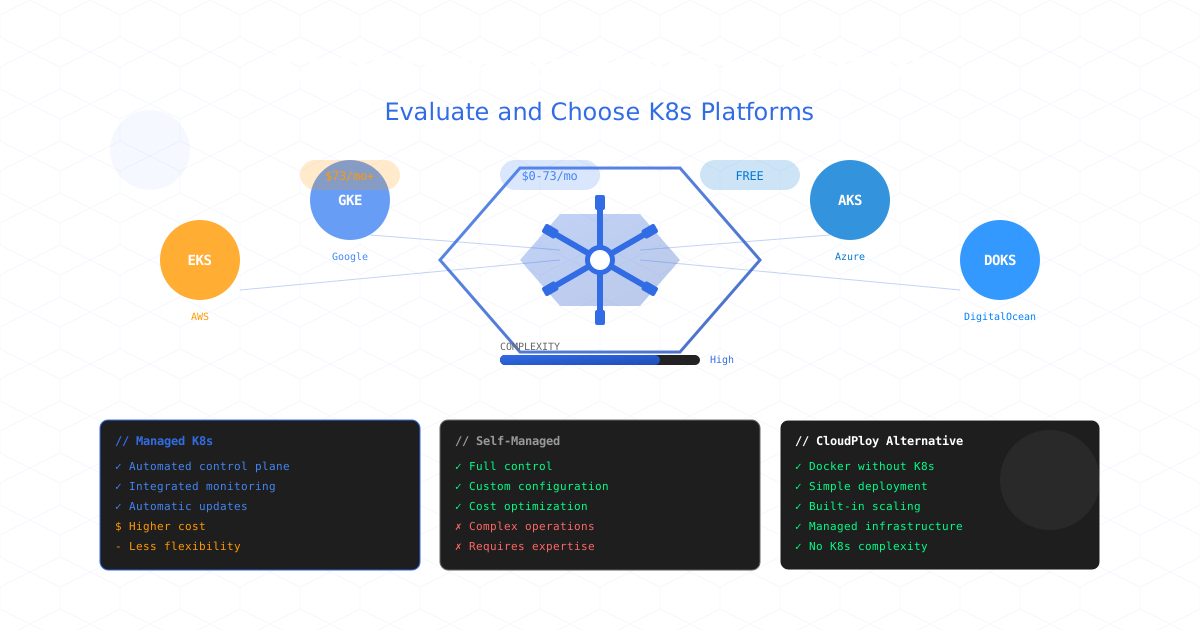
Kubernetes has become the de facto standard for container orchestration, with 96% of organizations either using or evaluating it. But choosing the right Kubernetes hosting platform can be overwhelming - from managed services like EKS and GKE to self-managed clusters, the options are vast and complex. This comprehensive guide helps you evaluate Kubernetes hosting platforms based on your specific requirements, budget, and technical expertise.
Understanding Kubernetes Hosting Requirements
Before diving into platform comparisons, it’s crucial to understand what Kubernetes hosting actually entails and what your organization needs.
Core Components Every K8s Platform Must Provide
Control Plane Components:
- API Server: Central management point
- etcd: Distributed key-value store for cluster data
- Scheduler: Assigns pods to nodes
- Controller Manager: Maintains cluster state
- Cloud Controller Manager: Cloud-specific controls
Worker Node Components:
- kubelet: Ensures containers are running
- kube-proxy: Network proxy
- Container runtime: Docker, containerd, or CRI-O
Essential Add-ons:
- DNS: Service discovery
- Ingress Controller: External access
- Network Plugin: Pod networking
- Storage Driver: Persistent volumes
- Monitoring: Metrics and observability
Evaluating Your Kubernetes Needs
# kubernetes-requirements-checklist.yaml
requirements:
  workload:
    type: [stateless, stateful, batch, ml]
    scale: [small, medium, large, enterprise]
    traffic_pattern: [steady, burst, seasonal]

  compliance:
    regulations: [gdpr, hipaa, pci, sox]
    data_residency: [single_region, multi_region]
    encryption: [at_rest, in_transit, key_management]

  technical:
    expertise_level: [beginner, intermediate, expert]
    management_preference: [fully_managed, semi_managed, self_managed]
    integration_needs: [ci_cd, monitoring, logging, security]

  operational:
    availability_sla: [99.9, 99.95, 99.99]
    disaster_recovery: [backup, multi_region, active_active]
    support_level: [community, business, enterprise]

  financial:
    budget_model: [fixed, variable, hybrid]
    cost_optimization: [spot_instances, reserved, on_demand]
    tco_timeline: [1_year, 3_year, 5_year]
Types of Kubernetes Hosting Platforms
1. Fully Managed Kubernetes Services
What They Offer:
- Automated control plane management
- Integrated cloud services
- Automatic updates and patches
- Built-in monitoring and logging
- Simplified scaling
Best For:
- Teams without deep K8s expertise
- Rapid deployment needs
- Focus on applications, not infrastructure
- Integration with cloud services
Popular Options:
- Amazon EKS (Elastic Kubernetes Service)
- Google GKE (Google Kubernetes Engine)
- Azure AKS (Azure Kubernetes Service)
- DigitalOcean Kubernetes
- IBM Cloud Kubernetes Service
2. Self-Managed Kubernetes
What You Get:
- Complete control over configuration
- Custom networking and security
- Choice of any infrastructure
- No vendor lock-in
What You’re Responsible For:
- Control plane deployment
- Updates and patches
- Backup and disaster recovery
- Monitoring setup
- Security hardening
Common Tools:
- kubeadm: Official K8s installer
- kops: Kubernetes Operations
- Kubespray: Ansible-based deployment
- Rancher: Management platform
- OpenShift: Enterprise platform
3. Kubernetes Platform-as-a-Service
Middle Ground Approach:
- Managed control plane
- Simplified operations
- Developer-friendly
- Built-in CI/CD
- Application-focused
Examples:
- Red Hat OpenShift
- VMware Tanzu
- Platform9
- Rafay Systems
Detailed Platform Evaluation Criteria
Performance and Scalability
Key Metrics to Evaluate:
# performance-evaluation.py
class K8sPerformanceMetrics:
    def __init__(self, platform):
        self.platform = platform

    def evaluate_performance(self):
        metrics = {
            'pod_startup_time': self.measure_pod_startup(),
            'api_latency': self.measure_api_latency(),
            'network_throughput': self.measure_network_performance(),
            'storage_iops': self.measure_storage_performance(),
            'cluster_autoscaling_time': self.measure_autoscaling(),
            'max_nodes': self.get_max_nodes(),
            'max_pods_per_node': self.get_max_pods()
        }
        return metrics

    def performance_requirements(self):
        return {
            'small_workload': {
                'nodes': '3-10',
                'pods': '50-500',
                'api_calls_per_second': 100,
                'pod_churn_rate': 'low'
            },
            'medium_workload': {
                'nodes': '10-100',
                'pods': '500-5000',
                'api_calls_per_second': 1000,
                'pod_churn_rate': 'medium'
            },
            'large_workload': {
                'nodes': '100-1000',
                'pods': '5000-50000',
                'api_calls_per_second': 10000,
                'pod_churn_rate': 'high'
            },
            'enterprise_workload': {
                'nodes': '1000+',
                'pods': '50000+',
                'api_calls_per_second': 100000,
                'pod_churn_rate': 'very_high'
            }
        }
Cost Analysis Framework
Total Cost of Ownership (TCO) Calculation:
# kubernetes-cost-calculator.py
class K8sCostCalculator:
    def calculate_tco(self, platform, config):
        # Base infrastructure costs
        compute_cost = self.calculate_compute(config['nodes'], config['instance_type'])
        storage_cost = self.calculate_storage(config['storage_gb'])
        network_cost = self.calculate_network(config['egress_gb'])

        # Platform-specific costs
        control_plane_cost = self.get_control_plane_cost(platform)

        # Operational costs
        management_cost = self.calculate_management_overhead(platform)
        support_cost = self.get_support_cost(platform, config['support_tier'])

        # Hidden costs often overlooked
        hidden_costs = {
            'data_transfer': config['egress_gb'] * 0.09,  # Cross-AZ transfer
            'load_balancers': config['services'] * 20,     # Per LB/month
            'monitoring': config['nodes'] * 5,              # Per node metrics
            'logging': config['log_gb'] * 0.50,            # Log ingestion
            'backup': config['storage_gb'] * 0.025         # Snapshot storage
        }

        monthly_total = (
            compute_cost +
            storage_cost +
            network_cost +
            control_plane_cost +
            management_cost +
            support_cost +
            sum(hidden_costs.values())
        )

        return {
            'monthly': monthly_total,
            'annual': monthly_total * 12,
            'three_year': monthly_total * 36,
            'breakdown': {
                'infrastructure': compute_cost + storage_cost + network_cost,
                'platform': control_plane_cost,
                'operations': management_cost + support_cost,
                'hidden': sum(hidden_costs.values())
            }
        }
Security Evaluation Framework
Security Requirements Checklist:
# kubernetes-security-evaluation.yaml
security_evaluation:
  network_security:
    network_policies: required
    service_mesh: [istio, linkerd, consul]
    ingress_security: [oauth, mtls, waf]
    egress_control: required

  access_control:
    rbac: required
    identity_provider: [oauth, saml, oidc]
    mfa: required
    audit_logging: comprehensive

  data_protection:
    encryption_at_rest: required
    encryption_in_transit: required
    secrets_management: [vault, sealed_secrets, external_secrets]
    key_rotation: automated

  compliance_features:
    pod_security_policies: enforced
    admission_controllers: [opa, gatekeeper]
    vulnerability_scanning: continuous
    compliance_reporting: automated

  runtime_protection:
    container_scanning: required
    runtime_monitoring: [falco, sysdig]
    intrusion_detection: required
    incident_response: automated
How to Evaluate for Compliance Needs
When evaluating Kubernetes platforms for compliance requirements, consider these factors:
HIPAA Compliance Evaluation:
# hipaa-k8s-evaluation.py
class HIPAAKubernetesEvaluation:
    def evaluate_platform(self, platform):
        """
        Evaluate if a K8s platform can support HIPAA compliance efforts.
        Note: Platform alone doesn't make you compliant - implementation matters.
        """

        requirements = {
            'encryption': {
                'at_rest': self.check_encryption_at_rest(platform),
                'in_transit': self.check_encryption_in_transit(platform),
                'key_management': self.check_key_management(platform)
            },
            'access_controls': {
                'rbac': self.check_rbac_capabilities(platform),
                'audit_logging': self.check_audit_logging(platform),
                'identity_management': self.check_identity_integration(platform)
            },
            'data_protection': {
                'backup_capabilities': self.check_backup_features(platform),
                'disaster_recovery': self.check_dr_capabilities(platform),
                'data_residency': self.check_data_location_controls(platform)
            },
            'monitoring': {
                'activity_monitoring': self.check_monitoring_capabilities(platform),
                'incident_response': self.check_incident_tools(platform),
                'vulnerability_management': self.check_security_scanning(platform)
            }
        }

        return {
            'platform': platform,
            'can_support_hipaa': all(requirements.values()),
            'additional_tools_needed': self.identify_gaps(requirements),
            'implementation_responsibility': 'customer',
            'note': 'Platform provides tools; compliance depends on proper implementation'
        }
PCI DSS Evaluation:
# pci-dss-k8s-requirements.yaml
pci_dss_platform_evaluation:
  network_segmentation:
    requirement: "Isolate cardholder data environment"
    evaluate:
      - network_policies_support
      - multi_tenancy_capabilities
      - traffic_encryption

  access_control:
    requirement: "Restrict access to cardholder data"
    evaluate:
      - rbac_granularity
      - privileged_access_management
      - session_management

  monitoring:
    requirement: "Track and monitor all access"
    evaluate:
      - audit_log_completeness
      - real_time_alerting
      - log_retention_capabilities

  vulnerability_management:
    requirement: "Maintain secure systems"
    evaluate:
      - patch_management_process
      - vulnerability_scanning_integration
      - security_update_frequency

  note: "Platform selection is just the first step - proper configuration and management are essential for PCI compliance"
Managed Kubernetes Services Comparison
Amazon EKS (Elastic Kubernetes Service)
Strengths:
- Deep AWS service integration
- Multiple compute options (EC2, Fargate, Outposts)
- Strong enterprise features
- Excellent documentation
Considerations:
- Higher cost than competitors
- Complex networking setup
- Limited regions for Fargate
Cost Structure:
- Control plane: $0.10/hour ($73/month)
- Worker nodes: Standard EC2 pricing
- Data transfer: Standard AWS rates
Best For:
- AWS-heavy organizations
- Enterprise workloads
- Teams needing AWS service integration
Google GKE (Google Kubernetes Engine)
Strengths:
- Most mature managed K8s service
- Excellent autoscaling capabilities
- Strong ML/AI integration
- Best-in-class networking
Considerations:
- Can be complex for beginners
- Costs can escalate quickly
- Requires GCP knowledge
Cost Structure:
- Zonal cluster: Free control plane
- Regional cluster: $0.10/hour
- Autopilot: Pay per pod resources
Best For:
- Kubernetes-native applications
- ML/AI workloads
- Teams wanting cutting-edge features
Azure AKS (Azure Kubernetes Service)
Strengths:
- Free control plane
- Excellent Windows container support
- Strong Active Directory integration
- Good hybrid cloud options
Considerations:
- Occasional stability issues
- Limited regions for some features
- Azure-specific knowledge needed
Cost Structure:
- Control plane: Free
- Worker nodes: Standard VM pricing
- Additional services as needed
Best For:
- Microsoft-centric organizations
- Hybrid cloud deployments
- Windows container workloads
DigitalOcean Kubernetes
Strengths:
- Simple, developer-friendly
- Predictable pricing
- Quick setup
- Good documentation
Considerations:
- Limited enterprise features
- Smaller ecosystem
- Basic monitoring
Cost Structure:
- Control plane: Free
- Worker nodes: From $12/month
- Simple, predictable pricing
Best For:
- Startups and SMBs
- Developer projects
- Cost-conscious teams
Self-Managed Kubernetes Evaluation
When to Choose Self-Managed
Suitable Scenarios:
def should_self_manage_k8s():
    factors = {
        'team_expertise': 'high',  # Deep K8s knowledge
        'custom_requirements': True,  # Special networking/security needs
        'cost_sensitivity': 'high',  # Can optimize costs
        'compliance_needs': 'specific',  # Unique requirements
        'existing_infrastructure': True,  # On-premises or specific cloud
        'vendor_independence': 'critical'  # Avoid lock-in
    }

    if all([
        factors['team_expertise'] == 'high',
        factors['custom_requirements'] or factors['compliance_needs'] == 'specific',
        factors['vendor_independence'] == 'critical'
    ]):
        return "Self-managed recommended"
    else:
        return "Consider managed service"
Self-Managed Platform Options
Rancher:
- Multi-cluster management
- User-friendly UI
- Good for hybrid deployments
- Active community
OpenShift:
- Enterprise-grade platform
- Built-in CI/CD
- Developer-friendly
- Red Hat support
Kubeadm:
- Official Kubernetes tool
- Maximum flexibility
- Requires most expertise
- No additional abstractions
Platform Selection Decision Tree
# k8s-platform-selector.py
def select_kubernetes_platform(requirements):
    """
    Help choose the right Kubernetes platform based on requirements
    """

    # Check expertise level
    if requirements['expertise'] == 'beginner':
        if requirements['budget'] < 1000:
            return "DigitalOcean Kubernetes or simpler container platforms"
        else:
            return "Managed service (EKS, GKE, AKS) with support"

    # Check compliance needs
    if requirements['compliance'] in ['hipaa', 'pci', 'sox']:
        platforms = []
        if requirements['cloud'] == 'aws':
            platforms.append("EKS with compliance tooling")
        elif requirements['cloud'] == 'gcp':
            platforms.append("GKE with security features")
        elif requirements['cloud'] == 'azure':
            platforms.append("AKS with Azure compliance")
        else:
            platforms.append("Self-managed with compliance tools")

        return f"Consider: {', '.join(platforms)}"

    # Check scale requirements
    if requirements['nodes'] > 100:
        if requirements['management_overhead'] == 'minimal':
            return "GKE Autopilot or EKS Fargate"
        else:
            return "GKE Standard or EKS with Karpenter"

    # Default recommendations
    if requirements['simplicity'] == 'high':
        return "Managed PaaS or simpler container platforms"
    else:
        return "Evaluate managed K8s services based on existing cloud"
Alternative Approaches to Kubernetes
When Kubernetes Might Be Overkill
Consider Simpler Alternatives If:
- Running fewer than 10 microservices
- Don’t need complex orchestration
- Team lacks K8s expertise
- Budget is limited
- Time to market is critical
Container Platforms Without K8s Complexity
Docker Swarm:
- Simpler than Kubernetes
- Built into Docker
- Good for small clusters
- Easy to learn
Amazon ECS:
- AWS-native container service
- Simpler than EKS
- Good AWS integration
- Lower operational overhead
Cloud Run/Fargate:
- Serverless containers
- No cluster management
- Pay per use
- Automatic scaling
CloudPloy Platform Approach: CloudPloy provides Docker container deployment without Kubernetes complexity:
# cloudploy-deployment.yml
# Simple container deployment without K8s overhead
name: my-app
containers:
  - name: web
    image: myapp:latest
    ports: [80]
    replicas: 3

  - name: worker
    image: myapp-worker:latest
    replicas: 2

services:
  - postgres:14
  - redis:7

# CloudPloy handles:
# - Load balancing
# - Auto-scaling
# - Health checks
# - Rolling updates
# - Without K8s complexity
Cost Optimization Strategies
Reducing Kubernetes Costs
# k8s-cost-optimization.py
class K8sCostOptimizer:
    def optimize_cluster_costs(self, cluster_config):
        optimizations = []

        # Right-sizing nodes
        if cluster_config['node_utilization'] < 60:
            optimizations.append({
                'action': 'Reduce node size or count',
                'potential_savings': '30-40%',
                'implementation': 'Use cluster autoscaler with proper limits'
            })

        # Spot/Preemptible instances
        if cluster_config['workload_type'] == 'stateless':
            optimizations.append({
                'action': 'Use spot instances for workers',
                'potential_savings': '60-90%',
                'implementation': 'Configure node pools with spot instances'
            })

        # Resource requests/limits
        if not cluster_config['resource_limits_set']:
            optimizations.append({
                'action': 'Set proper resource requests/limits',
                'potential_savings': '20-30%',
                'implementation': 'Implement resource quotas and limits'
            })

        # Unused resources
        if cluster_config['unused_pvs'] > 0:
            optimizations.append({
                'action': 'Clean up unused persistent volumes',
                'potential_savings': '10-20%',
                'implementation': 'Audit and remove orphaned PVs'
            })

        return optimizations
Multi-Cloud Kubernetes Strategy
# multi-cloud-k8s-strategy.yaml
multi_cloud_approach:
  primary_cluster:
    provider: gke  # Best K8s features
    workloads: [production_critical, ml_training]

  secondary_cluster:
    provider: digitalocean  # Cost-effective
    workloads: [development, staging, batch_jobs]

  edge_clusters:
    provider: k3s  # Lightweight
    workloads: [edge_computing, iot_gateways]

  benefits:
    - avoid_vendor_lock_in
    - optimize_costs_per_workload
    - geographic_distribution
    - compliance_flexibility
Monitoring and Management Tools
Essential Kubernetes Monitoring
# k8s-monitoring-stack.yaml
monitoring_requirements:
  metrics:
    solution: [prometheus, datadog, new_relic]
    collect:
      - resource_utilization
      - application_metrics
      - custom_metrics

  logging:
    solution: [elk_stack, fluentd, loki]
    requirements:
      - centralized_logging
      - log_aggregation
      - search_capabilities

  tracing:
    solution: [jaeger, zipkin, aws_xray]
    capabilities:
      - distributed_tracing
      - latency_analysis
      - dependency_mapping

  visualization:
    solution: [grafana, kibana, datadog]
    dashboards:
      - cluster_overview
      - application_performance
      - cost_tracking
Migration Strategies
Migrating to Kubernetes
# k8s-migration-planner.py
class K8sMigrationPlanner:
    def create_migration_plan(self, current_infrastructure):
        phases = []

        # Phase 1: Assessment
        phases.append({
            'phase': 'Assessment',
            'duration': '2-4 weeks',
            'tasks': [
                'Inventory applications',
                'Identify dependencies',
                'Assess containerization readiness',
                'Define success criteria'
            ]
        })

        # Phase 2: Containerization
        phases.append({
            'phase': 'Containerization',
            'duration': '4-8 weeks',
            'tasks': [
                'Create Dockerfiles',
                'Build CI/CD pipeline',
                'Test containers locally',
                'Setup registry'
            ]
        })

        # Phase 3: Kubernetes Setup
        phases.append({
            'phase': 'Platform Setup',
            'duration': '2-4 weeks',
            'tasks': [
                'Choose platform',
                'Setup clusters',
                'Configure networking',
                'Implement security'
            ]
        })

        # Phase 4: Migration
        phases.append({
            'phase': 'Application Migration',
            'duration': '4-12 weeks',
            'tasks': [
                'Deploy non-critical apps first',
                'Migrate databases',
                'Setup monitoring',
                'Migrate critical apps'
            ]
        })

        return phases
Common Pitfalls and How to Avoid Them
Kubernetes Anti-Patterns
1. Over-Engineering:
- Using K8s for simple applications
- Complex networking when not needed
- Too many abstractions
Solution: Start simple, add complexity as needed
2. Resource Mismanagement:
- No resource limits set
- Over-provisioning nodes
- Ignored recommendations
Solution: Implement resource quotas and monitoring
3. Security Negligence:
- Running containers as root
- No network policies
- Exposed dashboards
Solution: Security-first approach with proper RBAC
4. Cost Surprises:
- Uncontrolled autoscaling
- Forgotten resources
- Data transfer costs
Solution: Implement cost monitoring and alerts
Making the Right Choice
Decision Framework
def evaluate_k8s_readiness():
    """
    Evaluate if your organization is ready for Kubernetes
    """

    readiness_score = 0
    recommendations = []

    # Technical readiness
    if has_microservices_architecture():
        readiness_score += 25
    else:
        recommendations.append("Consider microservices architecture first")

    if team_has_container_experience():
        readiness_score += 25
    else:
        recommendations.append("Start with Docker basics")

    # Operational readiness
    if can_handle_operational_complexity():
        readiness_score += 25
    else:
        recommendations.append("Consider managed services or alternatives")

    # Business readiness
    if business_case_justifies_complexity():
        readiness_score += 25
    else:
        recommendations.append("Evaluate simpler alternatives")

    if readiness_score >= 75:
        return "Ready for Kubernetes"
    elif readiness_score >= 50:
        return "Consider managed Kubernetes with support"
    else:
        return "Explore simpler container platforms"
Alternative: CloudPloy’s Simplified Approach
While Kubernetes offers powerful orchestration, many teams find its complexity overwhelming. CloudPloy provides container benefits without K8s complexity:
What CloudPloy Offers:
- Docker container deployment
- Automatic scaling and load balancing
- Built-in monitoring and logging
- Database and service integration
- Simple deployment process
- No Kubernetes expertise required
Comparison:
kubernetes_deployment:
  complexity: high
  learning_curve: steep
  time_to_deploy: hours_to_days
  expertise_required: significant
  operational_overhead: high

cloudploy_deployment:
  complexity: low
  learning_curve: minimal
  time_to_deploy: minutes
  expertise_required: basic
  operational_overhead: managed
Conclusion
Choosing the right Kubernetes hosting platform requires careful evaluation of your technical requirements, team expertise, compliance needs, and budget. While Kubernetes offers powerful orchestration capabilities, it’s not always the right choice for every organization.
Key Takeaways:
- Assess your actual needs before choosing Kubernetes
- Managed services reduce operational overhead but cost more
- Self-managed requires significant expertise
- Consider simpler alternatives for straightforward applications
- Platform choice depends on your specific constraints
Whether you choose a managed Kubernetes service, self-manage your clusters, or opt for a simpler container platform like CloudPloy, the key is matching the solution to your actual needs rather than following trends.
Remember: The best platform is the one that lets your team deliver value efficiently while maintaining security and compliance requirements. Sometimes that’s Kubernetes, sometimes it’s not.