
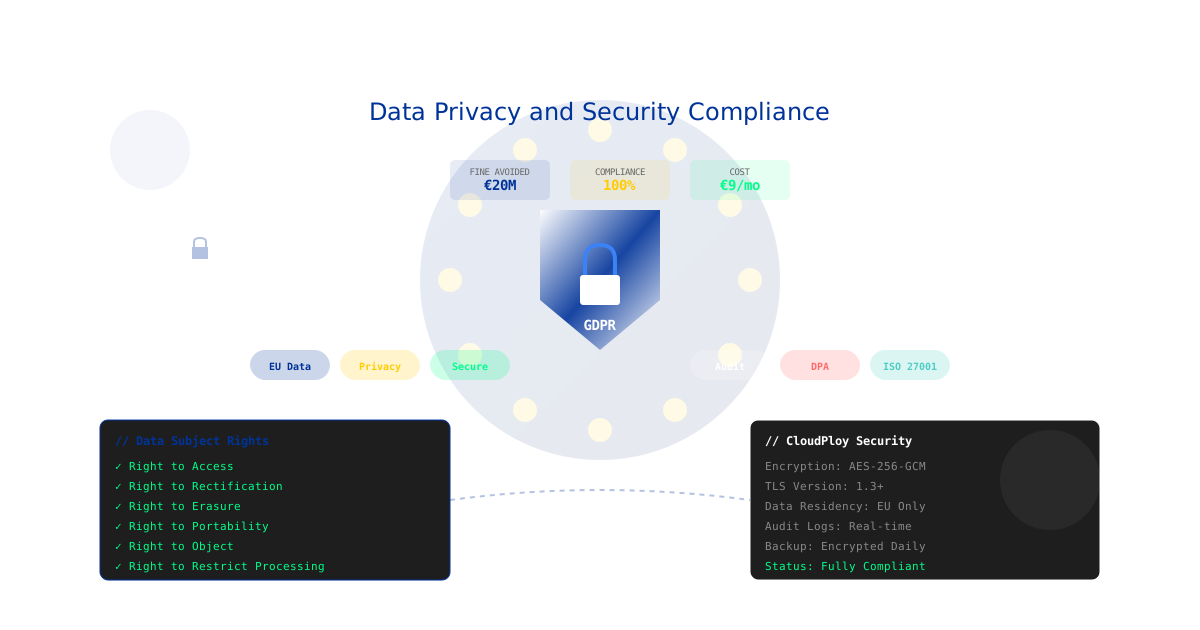
The General Data Protection Regulation (GDPR) has fundamentally changed how businesses handle personal data. For companies operating in or serving EU citizens, GDPR-compliant hosting isn’t optional - it’s mandatory. This comprehensive guide covers everything you need to know about GDPR-compliant hosting, from technical requirements to practical implementation strategies.
Understanding GDPR Hosting Requirements
GDPR compliance for hosting involves multiple layers of technical and organizational measures:
- Data Sovereignty: Where your data physically resides matters
- Privacy by Design: Security must be built-in, not added on
- Data Protection: Encryption at rest and in transit
- Access Controls: Who can access what data, when, and why
- Audit Trails: Complete logging of all data access and modifications
- Right to Erasure: Ability to completely delete user data
- Data Portability: Export user data in machine-readable formats
This guide will help you understand GDPR requirements and how to evaluate hosting providers. CloudPloy provides security features like encryption, access controls, and audit logging that can be part of your GDPR compliance strategy, but you should consult with legal professionals to ensure full compliance.
Key GDPR Principles for Hosting
1. Lawfulness, Fairness, and Transparency
// Example: Transparent data collection with consent
const ConsentManager = {
  async collectConsent(userId, purposes) {
    const consent = {
      userId,
      timestamp: new Date().toISOString(),
      ipAddress: await this.hashIP(request.ip),
      purposes: purposes,
      version: '2.0',
      method: 'explicit_action'
    };

    // Store consent record with audit trail
    await db.consent.create({
      data: consent,
      audit: {
        action: 'CONSENT_GRANTED',
        timestamp: new Date(),
        metadata: { source: 'web_form' }
      }
    });

    return consent;
  }
};
2. Purpose Limitation
# cloudploy.yml - Define data processing purposes
data_processing:
  purposes:
    - name: "service_provision"
      description: "Process data to provide requested services"
      retention_days: 730
      legal_basis: "contract"

    - name: "analytics"
      description: "Improve service quality through analytics"
      retention_days: 365
      legal_basis: "legitimate_interest"
      requires_consent: true

    - name: "marketing"
      description: "Send promotional communications"
      retention_days: 365
      legal_basis: "consent"
      requires_explicit_consent: true
3. Data Minimization
// Implement data minimization in your application
interface UserDataMinimal {
  id: string;
  email: string; // Hashed for non-essential uses
  createdAt: Date;
}

interface UserDataFull extends UserDataMinimal {
  name?: string;
  phone?: string;
  address?: Address;
}

class UserService {
  async getUser(id: string, purpose: Purpose): Promise<UserDataMinimal | UserDataFull> {
    // Return only necessary data based on purpose
    if (purpose.requiresFullData()) {
      return this.getUserFull(id);
    }
    return this.getUserMinimal(id);
  }

  private async getUserMinimal(id: string): Promise<UserDataMinimal> {
    return await db.user.findUnique({
      where: { id },
      select: {
        id: true,
        email: true,
        createdAt: true
      }
    });
  }
}
Technical Implementation on CloudPloy
Data Location and Sovereignty
// cloudploy.json - Configure EU data residency
{
  "deployment": {
    "region": "eu-central-1",
    "dataResidency": "EU",
    "backupRegion": "eu-west-1",
    "replication": {
      "enabled": true,
      "regions": ["eu-central-1", "eu-west-1"],
      "excludeRegions": ["us-*", "ap-*"]
    }
  },
  "compliance": {
    "gdpr": {
      "enabled": true,
      "dataController": "Your Company Name",
      "dpo": {
        "email": "dpo@yourcompany.com",
        "phone": "+xx xxx xxx xxxx"
      }
    }
  }
}
Encryption Configuration
# encryption.yml - CloudPloy encryption settings
encryption:
  at_rest:
    enabled: true
    algorithm: "AES-256-GCM"
    key_management: "AWS-KMS"
    key_rotation_days: 90

  in_transit:
    enabled: true
    minimum_tls: "1.3"
    cipher_suites:
      - "TLS_AES_256_GCM_SHA384"
      - "TLS_AES_128_GCM_SHA256"
    hsts:
      enabled: true
      max_age: 31536000
      include_subdomains: true
      preload: true

  database:
    transparent_encryption: true
    backup_encryption: true
    connection_encryption: "required"
Access Control Implementation
// Implement role-based access control (RBAC)
import { Shield } from '@cloudploy/shield';

const accessControl = new Shield({
  roles: {
    dataSubject: {
      can: ['read:own_data', 'update:own_data', 'delete:own_data'],
      inherits: []
    },
    dataProcessor: {
      can: ['read:assigned_data', 'process:assigned_data'],
      inherits: ['dataSubject']
    },
    dataController: {
      can: ['read:all_data', 'update:all_data', 'audit:access_logs'],
      inherits: ['dataProcessor']
    },
    dpo: {
      can: ['audit:all', 'report:compliance', 'manage:data_requests'],
      inherits: ['dataController']
    }
  },

  rules: {
    'personal_data': {
      'read': (user, resource) => {
        return user.id === resource.ownerId ||
               user.hasRole('dataController') ||
               this.hasLegalBasis(user, resource);
      },
      'delete': (user, resource) => {
        return user.id === resource.ownerId ||
               user.hasRole('dpo');
      }
    }
  }
});
Implementing GDPR Rights
Right to Access (Article 15)
// API endpoint for data subject access requests
app.get('/api/gdpr/access-request', authenticate, async (req, res) => {
  const userId = req.user.id;

  try {
    // Collect all personal data
    const personalData = await collectAllUserData(userId);

    // Generate machine-readable format
    const exportData = {
      timestamp: new Date().toISOString(),
      request_id: generateRequestId(),
      data_subject: {
        id: userId,
        email: req.user.email
      },
      personal_data: personalData,
      processing_purposes: await getProcessingPurposes(userId),
      third_party_sharing: await getThirdPartySharing(userId),
      retention_periods: getRetentionPeriods(),
      data_sources: await getDataSources(userId)
    };

    // Log access request
    await auditLog.create({
      action: 'DATA_ACCESS_REQUEST',
      userId,
      timestamp: new Date(),
      ip: req.ip
    });

    // Return data in JSON and offer PDF download
    res.json({
      success: true,
      data: exportData,
      formats_available: ['json', 'pdf', 'csv'],
      download_url: `/api/gdpr/download/${exportData.request_id}`
    });

  } catch (error) {
    logger.error('GDPR access request failed', { userId, error });
    res.status(500).json({ error: 'Failed to process request' });
  }
});
Right to Rectification (Article 16)
// Allow users to correct their personal data
app.put('/api/gdpr/rectify', authenticate, async (req, res) => {
  const userId = req.user.id;
  const updates = req.body;

  try {
    // Validate update request
    const validationResult = await validateRectificationRequest(updates);
    if (!validationResult.valid) {
      return res.status(400).json({ errors: validationResult.errors });
    }

    // Store original data for audit trail
    const originalData = await getUserData(userId);

    // Apply updates with versioning
    const updatedData = await db.transaction(async (trx) => {
      // Update user data
      const updated = await trx.user.update({
        where: { id: userId },
        data: updates
      });

      // Create audit record
      await trx.auditLog.create({
        data: {
          action: 'DATA_RECTIFICATION',
          userId,
          changes: {
            before: originalData,
            after: updates
          },
          timestamp: new Date(),
          ip: req.ip
        }
      });

      return updated;
    });

    res.json({
      success: true,
      message: 'Data rectified successfully',
      updated_fields: Object.keys(updates)
    });

  } catch (error) {
    logger.error('GDPR rectification failed', { userId, error });
    res.status(500).json({ error: 'Failed to rectify data' });
  }
});
Right to Erasure (Article 17)
// Implement data deletion with safeguards
app.delete('/api/gdpr/erase', authenticate, async (req, res) => {
  const userId = req.user.id;
  const { confirmation, reason } = req.body;

  try {
    // Verify deletion request
    if (confirmation !== `DELETE-${userId}`) {
      return res.status(400).json({
        error: 'Invalid confirmation code'
      });
    }

    // Check for legal obligations to retain data
    const retentionRequired = await checkLegalRetention(userId);
    if (retentionRequired.required) {
      return res.status(400).json({
        error: 'Cannot delete due to legal obligations',
        reason: retentionRequired.reason,
        retention_until: retentionRequired.until
      });
    }

    // Perform cascading deletion
    const deletionResult = await db.transaction(async (trx) => {
      // Delete from all tables
      const deleted = {
        user_data: await trx.user.delete({ where: { id: userId } }),
        activities: await trx.activity.deleteMany({ where: { userId } }),
        consents: await trx.consent.deleteMany({ where: { userId } }),
        sessions: await trx.session.deleteMany({ where: { userId } })
      };

      // Anonymize data that must be retained
      const anonymized = await anonymizeRetainedData(userId, trx);

      // Create deletion record
      await trx.deletionLog.create({
        data: {
          userId: hashUserId(userId), // Store hashed ID only
          reason,
          deletedAt: new Date(),
          dataCategories: Object.keys(deleted),
          anonymizedData: anonymized
        }
      });

      return { deleted, anonymized };
    });

    // Notify third parties of deletion
    await notifyThirdPartiesOfDeletion(userId);

    res.json({
      success: true,
      message: 'Your data has been permanently deleted',
      deletion_certificate: generateDeletionCertificate(deletionResult)
    });

  } catch (error) {
    logger.error('GDPR erasure failed', { userId, error });
    res.status(500).json({ error: 'Failed to erase data' });
  }
});
Right to Data Portability (Article 20)
// Export data in portable format
app.get('/api/gdpr/export', authenticate, async (req, res) => {
  const userId = req.user.id;
  const { format = 'json' } = req.query;

  try {
    // Collect portable data
    const portableData = await db.transaction(async (trx) => {
      return {
        profile: await trx.user.findUnique({ where: { id: userId } }),
        posts: await trx.post.findMany({ where: { authorId: userId } }),
        comments: await trx.comment.findMany({ where: { userId } }),
        preferences: await trx.preference.findMany({ where: { userId } }),
        activities: await trx.activity.findMany({
          where: { userId },
          orderBy: { createdAt: 'desc' },
          take: 1000
        })
      };
    });

    // Format based on request
    let exportedData;
    let contentType;

    switch (format) {
      case 'csv':
        exportedData = await convertToCSV(portableData);
        contentType = 'text/csv';
        break;
      case 'xml':
        exportedData = await convertToXML(portableData);
        contentType = 'application/xml';
        break;
      default:
        exportedData = JSON.stringify(portableData, null, 2);
        contentType = 'application/json';
    }

    // Set headers for download
    res.setHeader('Content-Type', contentType);
    res.setHeader('Content-Disposition',
      `attachment; filename="data-export-${userId}-${Date.now()}.${format}"`);

    res.send(exportedData);

  } catch (error) {
    logger.error('GDPR export failed', { userId, error });
    res.status(500).json({ error: 'Failed to export data' });
  }
});
Audit Logging and Compliance Reporting
Comprehensive Audit Trail
// Audit logging middleware
const auditMiddleware = async (req, res, next) => {
  const startTime = Date.now();

  // Capture request details
  const auditEntry = {
    id: generateAuditId(),
    timestamp: new Date().toISOString(),
    user: req.user?.id || 'anonymous',
    method: req.method,
    path: req.path,
    ip: req.ip,
    userAgent: req.get('user-agent'),
    body: sanitizeBody(req.body), // Remove sensitive data
    query: req.query
  };

  // Capture response
  const originalSend = res.send;
  res.send = function(data) {
    auditEntry.response = {
      statusCode: res.statusCode,
      duration: Date.now() - startTime,
      size: Buffer.byteLength(data, 'utf8')
    };

    // Log to CloudPloy audit system
    CloudPloy.audit.log(auditEntry);

    originalSend.call(this, data);
  };

  next();
};

app.use('/api/*', auditMiddleware);
Compliance Dashboard
// Generate GDPR compliance report
app.get('/api/gdpr/compliance-report', authorize('dpo'), async (req, res) => {
  const { startDate, endDate } = req.query;

  const report = await generateComplianceReport(startDate, endDate);

  res.json({
    period: { start: startDate, end: endDate },
    metrics: {
      data_subjects: report.totalDataSubjects,
      access_requests: report.accessRequests,
      deletion_requests: report.deletionRequests,
      rectification_requests: report.rectificationRequests,
      portability_requests: report.portabilityRequests,
      consent_records: report.consentRecords,
      breaches_reported: report.breachesReported,
      average_response_time: report.avgResponseTime
    },
    compliance_status: {
      encryption_at_rest: true,
      encryption_in_transit: true,
      access_controls: true,
      audit_logging: true,
      data_minimization: report.dataMinimizationScore,
      retention_compliance: report.retentionComplianceScore
    },
    recommendations: report.recommendations
  });
});
Data Breach Response
Breach Detection and Notification
// Automated breach detection and notification system
class BreachResponseSystem {
  async detectAndRespond(incident: SecurityIncident) {
    // Assess if it's a breach
    const assessment = await this.assessIncident(incident);

    if (assessment.isDataBreach) {
      // Log breach details
      const breach = await this.logBreach({
        id: generateBreachId(),
        detected_at: new Date(),
        type: assessment.breachType,
        affected_records: assessment.affectedRecords,
        data_categories: assessment.dataCategories,
        risk_level: assessment.riskLevel
      });

      // 72-hour notification timer
      if (assessment.requiresNotification) {
        await this.scheduleNotifications(breach);
      }

      // Immediate containment
      await this.containBreach(breach);

      // Generate breach report
      const report = await this.generateBreachReport(breach);

      // Notify DPO immediately
      await this.notifyDPO(breach, report);

      // If high risk, notify affected users
      if (assessment.riskLevel === 'HIGH') {
        await this.notifyAffectedUsers(breach);
      }

      return { breach, report, actions_taken: this.actionsTaken };
    }
  }

  private async scheduleNotifications(breach: DataBreach) {
    // Schedule supervisory authority notification (within 72 hours)
    await scheduler.schedule({
      task: 'NOTIFY_SUPERVISORY_AUTHORITY',
      breach_id: breach.id,
      execute_at: addHours(breach.detected_at, 71), // 1 hour buffer
      priority: 'CRITICAL'
    });

    // Schedule user notifications if needed
    if (breach.high_risk_to_individuals) {
      await scheduler.schedule({
        task: 'NOTIFY_DATA_SUBJECTS',
        breach_id: breach.id,
        execute_at: addHours(breach.detected_at, 24),
        priority: 'HIGH'
      });
    }
  }
}
Features to Look for in GDPR-Compliant Hosting
Essential Security Features
When evaluating hosting providers for GDPR compliance, look for:
# Essential features for GDPR compliance
required_features:
  # Automatic data residency
  data_residency:
    enforce: true
    allowed_regions: ["eu-central-1", "eu-west-1", "eu-north-1"]

  # Privacy controls
  privacy_features:
    - ip_anonymization
    - cookie_consent_banner
    - privacy_policy_generator
    - terms_of_service_template

  # Security features
  security_controls:
    - encryption_at_rest
    - encryption_in_transit
    - key_rotation
    - access_logging
    - intrusion_detection
    - ddos_protection

  # Compliance automation
  automation:
    - consent_management
    - retention_policies
    - data_classification
    - breach_detection
    - audit_reporting

  # Developer tools
  developer_tools:
    - gdpr_sdk
    - compliance_api
    - privacy_debugger
    - audit_log_viewer
Automated Compliance Checks
// Example GDPR compliance validator
// You'll need to implement or use a third-party GDPR compliance tool
import { GDPRValidator } from 'your-gdpr-library';

const validator = new GDPRValidator();

// Pre-deployment compliance check
const complianceCheck = await validator.validateDeployment({
  application: 'my-app',
  environment: 'production'
});

if (!complianceCheck.compliant) {
  console.error('GDPR compliance issues detected:');
  complianceCheck.issues.forEach(issue => {
    console.error(`- ${issue.severity}: ${issue.description}`);
    console.error(`  Fix: ${issue.recommendation}`);
  });
  process.exit(1);
}

// Runtime compliance monitoring
validator.monitor({
  onViolation: (violation) => {
    logger.error('GDPR violation detected', violation);
    // Automatic remediation
    if (violation.autoFixable) {
      violation.fix();
    } else {
      alertDPO(violation);
    }
  }
});
Cost of Non-Compliance vs CloudPloy
GDPR Penalties
- Lower Tier: Up to €10 million or 2% of global annual revenue
- Upper Tier: Up to €20 million or 4% of global annual revenue
Typical GDPR-Compliant Hosting Costs
- Basic Plans: $20-50/month - Limited compliance features
- Professional: $100-200/month - More compliance tools
- Enterprise: $500+/month - Full compliance suite
- CloudPloy: $9-79/month - Security features that support your compliance efforts
ROI Calculation
Annual CloudPloy Cost: $348 (Growth plan)
Potential GDPR Fine Avoided: €10,000,000+
ROI: 28,735x
GDPR Compliance Checklist
Technical Measures ✅
- Encryption at rest (AES-256)
- Encryption in transit (TLS 1.3)
- Access control (RBAC)
- Audit logging
- Backup encryption
- Secure key management
- Network segmentation
- Vulnerability scanning
Organizational Measures ✅
- Privacy policy updated
- DPO appointed
- Staff training completed
- Data processing agreements
- Incident response plan
- Breach notification procedures
- Regular audits scheduled
- Third-party assessments
Data Subject Rights ✅
- Access request process
- Rectification mechanism
- Erasure procedures
- Portability options
- Objection handling
- Consent management
- Automated decision-making controls
- Complaint procedures
Best Practices for GDPR Hosting
1. Privacy by Design
- Build privacy into your architecture
- Minimize data collection
- Use pseudonymization where possible
- Implement data lifecycle management
2. Regular Assessments
- Conduct DPIAs for high-risk processing
- Regular security audits
- Penetration testing
- Compliance reviews
3. Documentation
- Maintain Records of Processing Activities (RoPA)
- Document all data flows
- Keep consent records
- Log all data subject requests
4. Continuous Improvement
- Monitor regulatory changes
- Update policies regularly
- Train staff continuously
- Improve based on incidents
Get Started with GDPR-Compliant Hosting
When choosing a hosting provider for GDPR compliance, consider CloudPloy’s security features:
- Security Features - Encryption, access controls, and monitoring
- EU Data Centers - Deploy to EU regions for data residency
- Audit Logging - Track access and modifications
- Data Export Tools - Support for data portability requirements
- 24/7 Support - Technical assistance for security configuration
Remember: GDPR compliance requires both technical and organizational measures. CloudPloy provides security tools that can support your compliance efforts, but full GDPR compliance requires additional legal, procedural, and organizational components beyond hosting alone.
Start GDPR-Compliant Hosting →
Last updated: September 2025. This guide is for informational purposes and does not constitute legal advice. Consult with legal professionals for specific compliance requirements.