
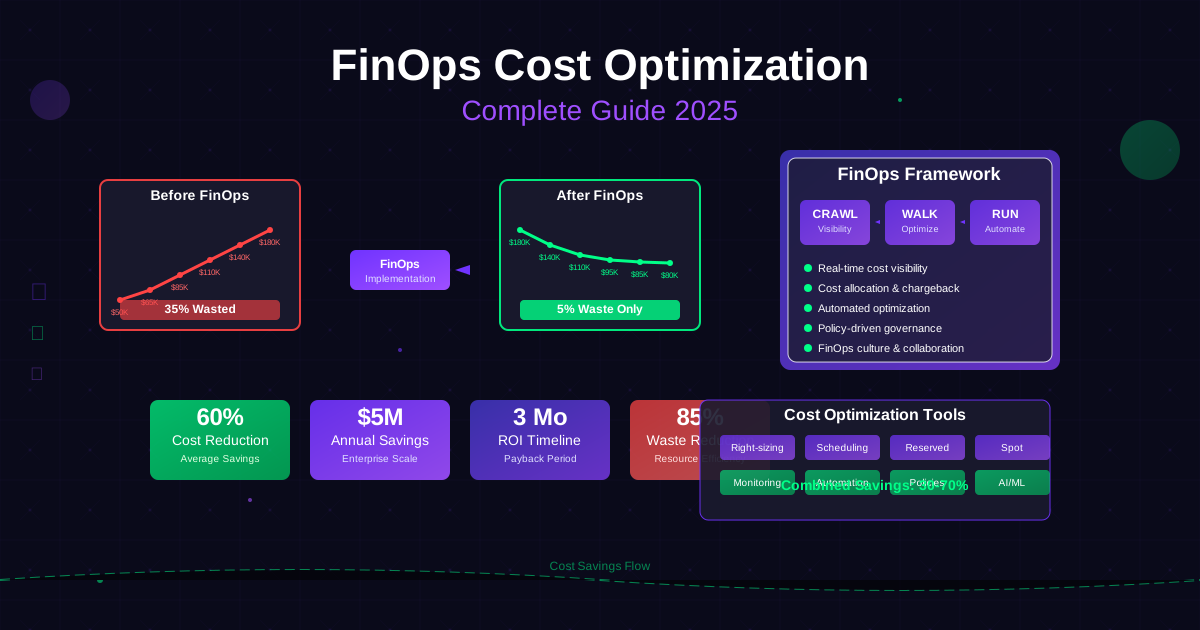
Cloud spending has reached $600 billion globally in 2024, with 35% of organizations reporting cloud costs as their top infrastructure concern. Yet studies show that 30-40% of cloud spending is wasted on unused resources, over-provisioned instances, and inefficient architectures. Enter FinOps (Financial Operations) – the practice of bringing financial accountability to cloud spending while maintaining the agility and innovation benefits of cloud computing.
In this comprehensive guide, we’ll explore how to implement FinOps practices that can reduce your cloud costs by 60% or more, while actually improving performance and reliability. We’ll cover everything from foundational cost visibility to advanced optimization strategies, and show how platforms like CloudPloy can automate much of the heavy lifting.
Understanding FinOps: The Cloud Cost Revolution
FinOps represents a cultural shift in how organizations approach cloud spending, moving from “cloud is someone else’s problem” to “everyone is responsible for cloud costs.” It combines financial management principles with cloud engineering practices to create a sustainable approach to cloud economics.
The FinOps Framework
Core Principles:
- Teams need to collaborate - Finance, Engineering, and Business teams work together
- Everyone takes ownership - Decisions are driven by business value
- A centralized team drives FinOps - While execution is distributed
- FinOps data should be accessible and timely - Real-time visibility into costs
- FinOps decisions are driven by business value - Cost optimization supports business objectives
- Take advantage of the variable cost model of cloud - Leverage cloud elasticity
FinOps Maturity Model
class FinOpsMaturity:
    def assess_organization_maturity(self, organization):
        maturity_levels = {
            'crawl': {
                'cost_visibility': 'basic_billing_alerts',
                'allocation': 'department_level',
                'optimization': 'manual_rightsizing',
                'governance': 'basic_policies',
                'automation': 'minimal'
            },
            'walk': {
                'cost_visibility': 'detailed_cost_breakdown',
                'allocation': 'team_and_project_level',
                'optimization': 'scheduled_optimization',
                'governance': 'comprehensive_policies',
                'automation': 'basic_automation'
            },
            'run': {
                'cost_visibility': 'real_time_cost_analytics',
                'allocation': 'granular_resource_allocation',
                'optimization': 'ai_powered_optimization',
                'governance': 'dynamic_policy_enforcement',
                'automation': 'fully_automated_optimization'
            }
        }

        current_capabilities = self.assess_current_state(organization)
        return self.determine_maturity_level(current_capabilities)

    def create_improvement_plan(self, current_maturity, target_maturity):
        return {
            'phase_1': 'establish_cost_visibility',
            'phase_2': 'implement_allocation_and_accountability',
            'phase_3': 'automate_optimization_and_governance',
            'timeline': '6-12 months',
            'expected_savings': '30-60% cost reduction'
        }
Phase 1: Establishing Cost Visibility (Months 1-2)
1. Cost Monitoring and Alerting
Multi-Cloud Cost Aggregation
# Unified cost monitoring across cloud providers
class MultiCloudCostMonitor:
    def __init__(self):
        self.providers = {
            'aws': AWSCostClient(),
            'gcp': GCPBillingClient(),
            'azure': AzureCostClient(),
            'digitalocean': DOCostClient()
        }

    def get_unified_cost_data(self, time_period='last_30_days'):
        unified_costs = {}

        for provider_name, client in self.providers.items():
            try:
                costs = client.get_costs(time_period)
                unified_costs[provider_name] = {
                    'total_cost': costs.total,
                    'compute_cost': costs.compute,
                    'storage_cost': costs.storage,
                    'network_cost': costs.network,
                    'database_cost': costs.database,
                    'breakdown_by_service': costs.services,
                    'breakdown_by_project': costs.projects
                }
            except Exception as e:
                self.logger.error(f"Failed to fetch costs from {provider_name}: {e}")

        return self.calculate_totals(unified_costs)

    def generate_cost_alerts(self, thresholds):
        current_costs = self.get_unified_cost_data()

        alerts = []
        for provider, costs in current_costs.items():
            if costs['total_cost'] > thresholds.get(provider, {}).get('monthly_limit', float('inf')):
                alerts.append({
                    'severity': 'high',
                    'provider': provider,
                    'message': f"Monthly spend exceeded: ${costs['total_cost']:.2f}",
                    'recommendation': 'Review resource usage and consider optimization'
                })

            # Anomaly detection
            historical_average = self.get_historical_average(provider, 'last_90_days')
            if costs['total_cost'] > historical_average * 1.5:
                alerts.append({
                    'severity': 'medium',
                    'provider': provider,
                    'message': f"Spending 50% above average: ${costs['total_cost']:.2f}",
                    'recommendation': 'Investigate unusual resource consumption'
                })

        return alerts
Cost Dashboard Implementation
# Grafana dashboard for cost monitoring
apiVersion: v1
kind: ConfigMap
metadata:
  name: finops-dashboard
data:
  dashboard.json: |
    {
      "dashboard": {
        "title": "FinOps Cost Overview",
        "panels": [
          {
            "title": "Monthly Cloud Spend by Provider",
            "type": "stat",
            "targets": [
              {
                "expr": "sum(cloud_cost_usd) by (provider)",
                "legendFormat": "{{provider}}"
              }
            ]
          },
          {
            "title": "Cost Per Application",
            "type": "table",
            "targets": [
              {
                "expr": "sum(cloud_cost_usd) by (application, environment)",
                "format": "table"
              }
            ]
          },
          {
            "title": "Cost Trends (30 days)",
            "type": "graph",
            "targets": [
              {
                "expr": "increase(cloud_cost_usd[1d])",
                "legendFormat": "Daily Spend"
              }
            ]
          }
        ]
      }
    }
2. Resource Tagging Strategy
Comprehensive Tagging Framework
# Standardized tagging strategy
required_tags:
  financial:
    - cost_center: "engineering|marketing|sales|operations"
    - budget_owner: "email_address"
    - project: "project_identifier"
    - application: "application_name"

  operational:
    - environment: "dev|staging|prod"
    - team: "team_name"
    - owner: "team_lead_email"
    - provisioned_by: "platform|manual|terraform"

  governance:
    - data_classification: "public|internal|confidential|restricted"
    - backup_policy: "none|daily|weekly|monthly"
    - auto_shutdown: "true|false"
    - expiration_date: "YYYY-MM-DD"

tag_enforcement:
  policy_engine: open_policy_agent
  required_compliance: 95%
  violation_actions:
    - warning_notification
    - resource_quarantine
    - automatic_shutdown

automation:
  auto_tagging:
    - inherit_from_parent_resource
    - extract_from_git_repository
    - derive_from_deployment_pipeline
  tag_validation:
    - pre_deployment_checks
    - continuous_compliance_monitoring
    - automated_remediation
Automated Tagging Implementation
class ResourceTagger:
    def __init__(self, cloud_clients):
        self.cloud_clients = cloud_clients
        self.tag_policies = self.load_tag_policies()

    def auto_tag_resources(self, resource_info):
        """Automatically apply tags based on context"""
        auto_tags = {}

        # Extract from Git repository
        if resource_info.git_repo:
            repo_info = self.parse_repository(resource_info.git_repo)
            auto_tags.update({
                'application': repo_info.name,
                'team': repo_info.owner_team,
                'project': repo_info.project_id
            })

        # Extract from deployment context
        if resource_info.deployment_context:
            auto_tags.update({
                'environment': resource_info.deployment_context.environment,
                'provisioned_by': 'cloudploy',
                'deployment_id': resource_info.deployment_context.id
            })

        # Apply cost allocation tags
        auto_tags.update({
            'cost_center': self.lookup_cost_center(auto_tags.get('team')),
            'budget_owner': self.lookup_budget_owner(auto_tags.get('project'))
        })

        # Set expiration for non-production resources
        if auto_tags.get('environment') in ['dev', 'staging']:
            auto_tags['auto_shutdown'] = 'true'
            auto_tags['expiration_date'] = self.calculate_expiration_date()

        return auto_tags

    def enforce_tagging_compliance(self):
        """Scan and remediate untagged resources"""
        for provider in self.cloud_clients:
            untagged_resources = provider.find_untagged_resources()

            for resource in untagged_resources:
                if self.can_auto_tag(resource):
                    tags = self.generate_tags_from_context(resource)
                    provider.apply_tags(resource.id, tags)
                else:
                    self.notify_owner_for_manual_tagging(resource)
Phase 2: Cost Allocation and Accountability (Months 3-4)
1. Chargeback and Showback Implementation
Cost Allocation Engine
class CostAllocationEngine:
    def __init__(self):
        self.allocation_models = {
            'direct_allocation': self.direct_allocation,
            'shared_cost_allocation': self.shared_cost_allocation,
            'activity_based_allocation': self.activity_based_allocation
        }

    def allocate_costs(self, billing_period):
        """Allocate costs across teams and projects"""
        raw_costs = self.get_raw_billing_data(billing_period)
        allocated_costs = {}

        for cost_item in raw_costs:
            if self.is_directly_allocatable(cost_item):
                allocation = self.direct_allocation(cost_item)
            elif self.is_shared_resource(cost_item):
                allocation = self.shared_cost_allocation(cost_item)
            else:
                allocation = self.activity_based_allocation(cost_item)

            self.add_to_allocation(allocated_costs, allocation)

        return self.generate_allocation_report(allocated_costs)

    def direct_allocation(self, cost_item):
        """Direct attribution based on resource tags"""
        return {
            'team': cost_item.tags.get('team'),
            'project': cost_item.tags.get('project'),
            'cost_center': cost_item.tags.get('cost_center'),
            'amount': cost_item.cost,
            'allocation_method': 'direct'
        }

    def shared_cost_allocation(self, cost_item):
        """Allocate shared resources based on usage metrics"""
        usage_data = self.get_usage_metrics(cost_item)
        total_usage = sum(usage_data.values())

        allocations = []
        for team, usage in usage_data.items():
            allocation_percentage = usage / total_usage
            allocations.append({
                'team': team,
                'amount': cost_item.cost * allocation_percentage,
                'allocation_method': 'usage_based',
                'usage_percentage': allocation_percentage
            })

        return allocations

    def generate_team_cost_reports(self, allocated_costs):
        """Generate team-specific cost reports"""
        reports = {}

        for team in self.get_all_teams():
            team_costs = self.filter_costs_by_team(allocated_costs, team)

            reports[team] = {
                'current_month': {
                    'total': sum(c.amount for c in team_costs),
                    'by_service': self.group_by_service(team_costs),
                    'by_project': self.group_by_project(team_costs),
                    'trends': self.calculate_trends(team, team_costs)
                },
                'budget_comparison': {
                    'allocated_budget': self.get_team_budget(team),
                    'actual_spend': sum(c.amount for c in team_costs),
                    'variance': self.calculate_variance(team, team_costs),
                    'forecast': self.forecast_monthly_spend(team, team_costs)
                },
                'optimization_recommendations': self.generate_team_recommendations(team, team_costs)
            }

        return reports
Automated Showback Reporting
# Automated cost reporting pipeline
apiVersion: tekton.dev/v1beta1
kind: Pipeline
metadata:
  name: finops-reporting-pipeline
spec:
  params:
  - name: billing-period
    default: "current-month"
  - name: report-format
    default: "html,pdf,csv"

  tasks:
  - name: extract-cost-data
    taskRef:
      name: multi-cloud-cost-extractor
    params:
    - name: period
      value: $(params.billing-period)

  - name: allocate-costs
    taskRef:
      name: cost-allocation-engine
    runAfter: ["extract-cost-data"]
    params:
    - name: cost-data
      value: $(tasks.extract-cost-data.results.cost-data)

  - name: generate-reports
    taskRef:
      name: report-generator
    runAfter: ["allocate-costs"]
    params:
    - name: allocated-costs
      value: $(tasks.allocate-costs.results.allocated-costs)
    - name: format
      value: $(params.report-format)

  - name: distribute-reports
    taskRef:
      name: report-distributor
    runAfter: ["generate-reports"]
    params:
    - name: reports
      value: $(tasks.generate-reports.results.reports)
2. Budget Management and Governance
Dynamic Budget Allocation
class BudgetManager:
    def __init__(self):
        self.budget_models = {
            'fixed_annual': self.fixed_annual_budget,
            'quarterly_adjusted': self.quarterly_adjusted_budget,
            'rolling_forecast': self.rolling_forecast_budget
        }

    def create_team_budgets(self, organization_budget, allocation_method='usage_based'):
        """Create and distribute budgets across teams"""
        if allocation_method == 'usage_based':
            historical_usage = self.get_historical_team_usage(months=6)
            total_usage = sum(historical_usage.values())

            team_budgets = {}
            for team, usage in historical_usage.items():
                usage_percentage = usage / total_usage
                team_budgets[team] = {
                    'annual_budget': organization_budget * usage_percentage,
                    'monthly_budget': (organization_budget * usage_percentage) / 12,
                    'allocation_basis': 'historical_usage',
                    'usage_percentage': usage_percentage
                }

        elif allocation_method == 'business_value':
            team_budgets = self.allocate_by_business_value(organization_budget)

        return self.apply_budget_policies(team_budgets)

    def monitor_budget_utilization(self):
        """Monitor and alert on budget utilization"""
        current_month = datetime.now().month
        teams_budgets = self.get_current_budgets()

        alerts = []
        for team, budget_info in teams_budgets.items():
            current_spend = self.get_team_spend(team, current_month)
            monthly_budget = budget_info['monthly_budget']

            utilization_percentage = current_spend / monthly_budget

            if utilization_percentage > 0.9:
                alerts.append({
                    'severity': 'critical',
                    'team': team,
                    'budget_utilization': utilization_percentage,
                    'message': f'Team {team} has used {utilization_percentage:.1%} of monthly budget',
                    'recommended_actions': [
                        'Review current spending',
                        'Implement immediate cost controls',
                        'Consider resource optimization'
                    ]
                })
            elif utilization_percentage > 0.75:
                alerts.append({
                    'severity': 'warning',
                    'team': team,
                    'budget_utilization': utilization_percentage,
                    'message': f'Team {team} approaching budget limit: {utilization_percentage:.1%}',
                    'recommended_actions': [
                        'Monitor spending closely',
                        'Review planned expenses',
                        'Consider optimization opportunities'
                    ]
                })

        return alerts

    def implement_automated_controls(self, budget_alerts):
        """Implement automated spending controls"""
        for alert in budget_alerts:
            if alert['severity'] == 'critical':
                # Implement hard stops
                self.implement_spending_freeze(alert['team'])
                self.scale_down_non_critical_resources(alert['team'])

            elif alert['severity'] == 'warning':
                # Implement soft controls
                self.require_approval_for_new_resources(alert['team'])
                self.enable_aggressive_auto_shutdown(alert['team'])
Phase 3: Cost Optimization Strategies (Months 5-8)
1. Right-Sizing and Resource Optimization
Intelligent Right-Sizing Engine
class IntelligentRightSizer:
    def __init__(self):
        self.metrics_analyzer = MetricsAnalyzer()
        self.ml_predictor = ResourcePredictionModel()
        self.cost_calculator = CostCalculator()

    def analyze_resource_utilization(self, time_period='last_30_days'):
        """Analyze resource utilization patterns"""
        resources = self.get_all_resources()
        recommendations = []

        for resource in resources:
            utilization_data = self.metrics_analyzer.get_utilization(
                resource.id, time_period
            )

            analysis = {
                'resource_id': resource.id,
                'resource_type': resource.type,
                'current_size': resource.size,
                'current_cost': resource.monthly_cost,
                'utilization_stats': {
                    'cpu_avg': utilization_data.cpu.average,
                    'cpu_p95': utilization_data.cpu.p95,
                    'memory_avg': utilization_data.memory.average,
                    'memory_p95': utilization_data.memory.p95,
                    'network_avg': utilization_data.network.average,
                    'storage_utilization': utilization_data.storage.utilization
                }
            }

            # Generate right-sizing recommendation
            recommendation = self.generate_right_sizing_recommendation(analysis)
            if recommendation:
                recommendations.append(recommendation)

        return sorted(recommendations, key=lambda x: x['potential_savings'], reverse=True)

    def generate_right_sizing_recommendation(self, analysis):
        """Generate specific right-sizing recommendations"""
        current_size = analysis['current_size']
        utilization = analysis['utilization_stats']

        # CPU-based recommendations
        if utilization['cpu_p95'] < 40:  # Under-utilized
            if utilization['cpu_p95'] < 20:
                recommended_size = self.get_smaller_size(current_size, downsize_factor=0.5)
            else:
                recommended_size = self.get_smaller_size(current_size, downsize_factor=0.75)

            potential_savings = self.calculate_savings(current_size, recommended_size)

            return {
                'resource_id': analysis['resource_id'],
                'current_size': current_size,
                'recommended_size': recommended_size,
                'reason': 'cpu_under_utilization',
                'confidence': self.calculate_confidence(utilization),
                'potential_savings': potential_savings,
                'risk_level': 'low' if utilization['cpu_p95'] < 20 else 'medium',
                'implementation': {
                    'method': 'gradual_resize',
                    'rollback_plan': 'immediate_revert_available',
                    'monitoring_period': '48_hours'
                }
            }

        # Memory-based recommendations
        elif utilization['memory_p95'] < 60:
            recommended_size = self.optimize_for_memory(current_size, utilization['memory_p95'])
            potential_savings = self.calculate_savings(current_size, recommended_size)

            return {
                'resource_id': analysis['resource_id'],
                'current_size': current_size,
                'recommended_size': recommended_size,
                'reason': 'memory_over_provisioned',
                'confidence': self.calculate_confidence(utilization),
                'potential_savings': potential_savings,
                'risk_level': 'low',
                'implementation': {
                    'method': 'memory_optimized_instance',
                    'rollback_plan': 'instance_type_revert',
                    'monitoring_period': '24_hours'
                }
            }

        return None

    def implement_right_sizing_safely(self, recommendations, risk_tolerance='medium'):
        """Safely implement right-sizing recommendations"""
        results = []

        for rec in recommendations:
            if rec['risk_level'] == 'low' or (rec['risk_level'] == 'medium' and risk_tolerance in ['medium', 'high']):
                try:
                    # Create backup/snapshot
                    backup_id = self.create_backup(rec['resource_id'])

                    # Implement change during maintenance window
                    change_result = self.implement_resize(
                        rec['resource_id'],
                        rec['recommended_size'],
                        backup_id
                    )

                    # Monitor post-change
                    monitoring_result = self.monitor_post_change(
                        rec['resource_id'],
                        duration=rec['implementation']['monitoring_period']
                    )

                    results.append({
                        'resource_id': rec['resource_id'],
                        'status': 'successful',
                        'actual_savings': change_result.cost_savings,
                        'performance_impact': monitoring_result.performance_change
                    })

                except Exception as e:
                    # Rollback on failure
                    self.rollback_change(rec['resource_id'], backup_id)
                    results.append({
                        'resource_id': rec['resource_id'],
                        'status': 'failed',
                        'error': str(e),
                        'rollback_successful': True
                    })

        return results
2. Automated Shutdown and Scheduling
Intelligent Resource Scheduling
class IntelligentScheduler:
    def __init__(self):
        self.usage_pattern_analyzer = UsagePatternAnalyzer()
        self.scheduler = ResourceScheduler()

    def analyze_usage_patterns(self, resource_id, analysis_period='last_60_days'):
        """Analyze resource usage patterns to optimize scheduling"""
        usage_data = self.get_detailed_usage_data(resource_id, analysis_period)

        patterns = {
            'hourly_usage': self.analyze_hourly_patterns(usage_data),
            'daily_usage': self.analyze_daily_patterns(usage_data),
            'weekly_usage': self.analyze_weekly_patterns(usage_data),
            'business_hours': self.detect_business_hours(usage_data),
            'idle_periods': self.detect_idle_periods(usage_data)
        }

        return patterns

    def create_optimization_schedule(self, resource_id):
        """Create intelligent start/stop schedule"""
        patterns = self.analyze_usage_patterns(resource_id)

        # Detect clear idle periods
        idle_periods = patterns['idle_periods']
        business_hours = patterns['business_hours']

        schedule = {}

        # Daily scheduling for development/staging environments
        if self.is_non_production(resource_id):
            schedule['daily'] = {
                'start_time': business_hours['start'],
                'stop_time': business_hours['end'],
                'timezone': self.get_resource_timezone(resource_id),
                'enabled': True
            }

        # Weekend scheduling
        weekend_usage = patterns['weekly_usage']['weekend_utilization']
        if weekend_usage < 10:  # Less than 10% usage on weekends
            schedule['weekend'] = {
                'enabled': True,
                'stop_friday': '20:00',
                'start_monday': '07:00'
            }

        # Extended idle period scheduling
        for idle_period in idle_periods:
            if idle_period['duration_hours'] > 4:
                schedule[f"idle_{idle_period['id']}"] = {
                    'start_time': idle_period['start'],
                    'end_time': idle_period['end'],
                    'recurrence': idle_period['recurrence'],
                    'confidence': idle_period['confidence']
                }

        return schedule

    def implement_intelligent_shutdown(self, resources=None):
        """Implement intelligent shutdown across resources"""
        if resources is None:
            resources = self.get_all_schedulable_resources()

        optimization_results = []

        for resource in resources:
            try:
                # Analyze patterns
                schedule = self.create_optimization_schedule(resource.id)

                if schedule:
                    # Calculate potential savings
                    potential_savings = self.calculate_shutdown_savings(resource, schedule)

                    # Implement if savings are significant
                    if potential_savings > 50:  # $50+ monthly savings
                        self.scheduler.apply_schedule(resource.id, schedule)

                        optimization_results.append({
                            'resource_id': resource.id,
                            'schedule_applied': schedule,
                            'estimated_monthly_savings': potential_savings,
                            'status': 'scheduled'
                        })

            except Exception as e:
                optimization_results.append({
                    'resource_id': resource.id,
                    'status': 'error',
                    'error': str(e)
                })

        return optimization_results

# Scheduling implementation with safety checks
class SafeResourceScheduler:
    def apply_schedule(self, resource_id, schedule):
        """Apply schedule with safety checks"""
        # Verify resource is suitable for scheduling
        if not self.is_safe_to_schedule(resource_id):
            raise SchedulingError(f"Resource {resource_id} not safe for automated scheduling")

        # Create notification for stakeholders
        self.notify_stakeholders(resource_id, schedule)

        # Implement schedule with grace period
        self.implement_schedule_with_grace_period(resource_id, schedule)

        # Monitor for issues
        self.setup_post_schedule_monitoring(resource_id)

    def is_safe_to_schedule(self, resource_id):
        """Check if resource is safe for automated scheduling"""
        resource = self.get_resource(resource_id)

        safety_checks = [
            self.check_production_classification(resource),
            self.check_dependencies(resource),
            self.check_sla_requirements(resource),
            self.check_stakeholder_approval(resource)
        ]

        return all(safety_checks)
3. Reserved Instance and Spot Instance Optimization
RI/SP Optimization Engine
class ReservedInstanceOptimizer:
    def __init__(self):
        self.usage_analyzer = UsageAnalyzer()
        self.pricing_calculator = PricingCalculator()
        self.recommendation_engine = RIRecommendationEngine()

    def analyze_ri_opportunities(self, analysis_period='last_12_months'):
        """Analyze Reserved Instance opportunities"""
        # Get historical usage data
        usage_data = self.usage_analyzer.get_instance_usage(analysis_period)

        # Identify stable workloads
        stable_workloads = self.identify_stable_workloads(usage_data)

        recommendations = []
        for workload in stable_workloads:
            # Calculate RI savings potential
            current_costs = workload.on_demand_costs
            ri_costs = self.pricing_calculator.calculate_ri_costs(
                workload.instance_type,
                workload.region,
                term='1_year',
                payment_option='partial_upfront'
            )

            savings = current_costs - ri_costs
            savings_percentage = (savings / current_costs) * 100

            if savings_percentage > 20:  # Minimum 20% savings threshold
                recommendations.append({
                    'instance_type': workload.instance_type,
                    'region': workload.region,
                    'quantity': workload.avg_instances,
                    'term': '1_year',
                    'payment_option': 'partial_upfront',
                    'annual_savings': savings * 12,
                    'savings_percentage': savings_percentage,
                    'upfront_cost': ri_costs.upfront,
                    'payback_period_months': self.calculate_payback_period(workload, ri_costs),
                    'confidence': workload.stability_score
                })

        return sorted(recommendations, key=lambda x: x['annual_savings'], reverse=True)

    def implement_ri_strategy(self, recommendations, budget_limit=None):
        """Implement Reserved Instance purchasing strategy"""
        implemented = []
        total_upfront_cost = 0

        for rec in recommendations:
            if budget_limit and total_upfront_cost + rec['upfront_cost'] > budget_limit:
                break

            if rec['confidence'] > 0.8 and rec['payback_period_months'] < 8:
                try:
                    purchase_result = self.purchase_reserved_instance(
                        instance_type=rec['instance_type'],
                        region=rec['region'],
                        quantity=rec['quantity'],
                        term=rec['term'],
                        payment_option=rec['payment_option']
                    )

                    implemented.append({
                        'recommendation': rec,
                        'purchase_id': purchase_result.purchase_id,
                        'actual_upfront_cost': purchase_result.upfront_cost,
                        'status': 'purchased'
                    })

                    total_upfront_cost += purchase_result.upfront_cost

                except Exception as e:
                    implemented.append({
                        'recommendation': rec,
                        'status': 'failed',
                        'error': str(e)
                    })

        return implemented

class SpotInstanceManager:
    def __init__(self):
        self.spot_analyzer = SpotPriceAnalyzer()
        self.workload_classifier = WorkloadClassifier()

    def identify_spot_candidates(self):
        """Identify workloads suitable for Spot instances"""
        workloads = self.get_all_workloads()
        spot_candidates = []

        for workload in workloads:
            suitability = self.assess_spot_suitability(workload)

            if suitability['score'] > 0.7:
                potential_savings = self.calculate_spot_savings(workload)
                spot_candidates.append({
                    'workload_id': workload.id,
                    'suitability_score': suitability['score'],
                    'fault_tolerance': suitability['fault_tolerance'],
                    'flexibility': suitability['flexibility'],
                    'potential_savings': potential_savings,
                    'recommended_strategy': self.recommend_spot_strategy(workload)
                })

        return sorted(spot_candidates, key=lambda x: x['potential_savings'], reverse=True)

    def implement_spot_strategy(self, workload_id, strategy):
        """Implement Spot instance strategy with fault tolerance"""
        strategies = {
            'mixed_instances': self.implement_mixed_instances,
            'spot_fleet': self.implement_spot_fleet,
            'spot_with_fallback': self.implement_spot_with_fallback
        }

        implementation_func = strategies.get(strategy['type'])
        if implementation_func:
            return implementation_func(workload_id, strategy['config'])
        else:
            raise ValueError(f"Unknown spot strategy: {strategy['type']}")
Phase 4: Advanced FinOps Automation (Months 9-12)
1. AI-Powered Cost Optimization
Machine Learning Cost Optimizer
class MLCostOptimizer:
    def __init__(self):
        self.ml_models = {
            'usage_prediction': UsagePredictionModel(),
            'anomaly_detection': CostAnomalyDetector(),
            'optimization_recommendation': OptimizationRecommendationModel(),
            'savings_potential': SavingsPotentialModel()
        }

    def predict_optimal_configurations(self, workload_data):
        """Use ML to predict optimal resource configurations"""
        # Prepare feature data
        features = self.extract_features(workload_data)

        # Predict optimal configuration
        optimal_config = self.ml_models['optimization_recommendation'].predict(features)

        # Validate recommendations with simulation
        simulated_performance = self.simulate_configuration(workload_data, optimal_config)

        if simulated_performance.meets_sla_requirements():
            return {
                'recommended_config': optimal_config,
                'predicted_savings': self.ml_models['savings_potential'].predict(optimal_config),
                'confidence_score': simulated_performance.confidence,
                'risk_assessment': self.assess_risk(optimal_config, workload_data)
            }

        return None

    def continuous_optimization(self):
        """Continuously optimize based on real-time data"""
        while True:
            # Get current resource utilization
            current_data = self.get_real_time_data()

            # Detect anomalies
            anomalies = self.ml_models['anomaly_detection'].detect(current_data)

            for anomaly in anomalies:
                if anomaly.type == 'cost_spike':
                    self.investigate_cost_spike(anomaly)
                elif anomaly.type == 'efficiency_degradation':
                    self.optimize_resource_efficiency(anomaly)

            # Generate optimization recommendations
            recommendations = self.generate_ml_recommendations(current_data)

            # Auto-implement low-risk optimizations
            for rec in recommendations:
                if rec.risk_level == 'low' and rec.potential_savings > 100:
                    self.auto_implement_optimization(rec)

            time.sleep(300)  # Run every 5 minutes

    def auto_implement_optimization(self, recommendation):
        """Safely auto-implement optimization recommendations"""
        try:
            # Create rollback point
            rollback_point = self.create_rollback_point(recommendation.resource_id)

            # Implement optimization
            self.implement_optimization(recommendation)

            # Monitor for issues
            monitoring_result = self.monitor_optimization_impact(
                recommendation.resource_id,
                duration_minutes=30
            )

            if monitoring_result.has_issues():
                self.rollback_optimization(rollback_point)
                self.log_optimization_failure(recommendation, monitoring_result)
            else:
                self.log_optimization_success(recommendation, monitoring_result)

        except Exception as e:
            self.log_optimization_error(recommendation, str(e))
            if 'rollback_point' in locals():
                self.rollback_optimization(rollback_point)
2. Policy-Driven Cost Governance
Automated Policy Enforcement
# Open Policy Agent rules for cost governance
package cloudploy.cost_governance

# Prevent expensive instance types without approval
deny[msg] {
    input.instance_type
    expensive_instances := ["m5.24xlarge", "c5.24xlarge", "r5.24xlarge"]
    input.instance_type in expensive_instances
    not input.approval_id
    msg := sprintf("Instance type %s requires pre-approval", [input.instance_type])
}

# Enforce tagging requirements
deny[msg] {
    input.resource_type
    required_tags := ["cost_center", "project", "owner", "environment"]
    missing_tags := [tag | tag := required_tags[_]; not input.tags[tag]]
    count(missing_tags) > 0
    msg := sprintf("Missing required tags: %s", [concat(", ", missing_tags)])
}

# Prevent deployment to expensive regions without justification
deny[msg] {
    input.region
    expensive_regions := ["us-west-1", "eu-west-1", "ap-northeast-1"]
    input.region in expensive_regions
    not input.cost_justification
    msg := sprintf("Deployment to expensive region %s requires cost justification", [input.region])
}

# Auto-shutdown policy for development resources
auto_shutdown_required[resource] {
    resource := input.resources[_]
    resource.tags.environment == "development"
    not resource.tags.auto_shutdown == "false"
    not resource.schedule
}

# Budget enforcement
deny[msg] {
    input.estimated_monthly_cost
    team_budget := data.budgets[input.team]
    current_spend := data.current_spend[input.team]
    projected_total := current_spend + input.estimated_monthly_cost
    projected_total > team_budget * 1.1  # 10% buffer
    msg := sprintf("Deployment would exceed team budget. Current: $%v, Estimated: $%v, Budget: $%v",
                   [current_spend, input.estimated_monthly_cost, team_budget])
}
Policy Implementation Engine
class PolicyEngine:
    def __init__(self):
        self.opa_client = OPAClient()
        self.policy_store = PolicyStore()
        self.violation_handler = ViolationHandler()

    def evaluate_deployment_request(self, deployment_request):
        """Evaluate deployment against cost policies"""
        # Prepare input for policy evaluation
        policy_input = {
            'resource_type': deployment_request.resource_type,
            'instance_type': deployment_request.instance_type,
            'region': deployment_request.region,
            'tags': deployment_request.tags,
            'estimated_monthly_cost': deployment_request.estimated_cost,
            'team': deployment_request.team,
            'approval_id': deployment_request.approval_id,
            'cost_justification': deployment_request.cost_justification
        }

        # Add context data
        context_data = {
            'budgets': self.get_team_budgets(),
            'current_spend': self.get_current_team_spend(),
            'expensive_regions': self.get_expensive_regions(),
            'policies': self.policy_store.get_active_policies()
        }

        # Evaluate against policies
        evaluation_result = self.opa_client.evaluate(
            policy_input,
            context_data,
            policy_package='cloudploy.cost_governance'
        )

        return self.process_evaluation_result(evaluation_result)

    def enforce_continuous_compliance(self):
        """Continuously monitor and enforce policy compliance"""
        while True:
            # Scan all resources
            resources = self.get_all_resources()

            for resource in resources:
                compliance_result = self.check_resource_compliance(resource)

                if not compliance_result.is_compliant:
                    self.handle_policy_violation(resource, compliance_result)

            time.sleep(3600)  # Check every hour

    def handle_policy_violation(self, resource, violation):
        """Handle policy violations with graduated response"""
        violation_severity = violation.severity

        if violation_severity == 'critical':
            # Immediate action required
            self.violation_handler.quarantine_resource(resource)
            self.violation_handler.notify_stakeholders(resource, violation, urgency='immediate')

        elif violation_severity == 'high':
            # Grace period with mandatory remediation
            self.violation_handler.schedule_remediation(resource, deadline='24_hours')
            self.violation_handler.notify_stakeholders(resource, violation, urgency='high')

        elif violation_severity == 'medium':
            # Auto-remediation if possible, otherwise notify
            if self.violation_handler.can_auto_remediate(violation):
                self.violation_handler.auto_remediate(resource, violation)
            else:
                self.violation_handler.create_remediation_ticket(resource, violation)

        # Log all violations for reporting
        self.violation_handler.log_violation(resource, violation)
CloudPloy’s FinOps Automation
Intelligent Cost Management
Built-in FinOps Features
# CloudPloy automatic cost optimization
cost_optimization:
  intelligent_scaling:
    enabled: true
    algorithms: [predictive, reactive, scheduled]
    cost_aware: true

  resource_right_sizing:
    enabled: true
    analysis_period: 30_days
    confidence_threshold: 0.8
    auto_apply: low_risk_only

  automated_shutdown:
    development_environments: true
    idle_detection: true
    business_hours_awareness: true
    cost_threshold: 10_usd_per_month

  spot_instance_integration:
    fault_tolerant_workloads: true
    hybrid_configurations: true
    automatic_fallback: true

financial_governance:
  budget_enforcement: true
  cost_allocation: automatic
  showback_reporting: true
  anomaly_detection: true

platform_economics:
  transparent_pricing: true
  no_egress_fees: true
  no_vendor_lock_in: true
  predictable_costs: true
Real-World FinOps Savings with CloudPloy
class CloudPloyFinOpsSavings:
    def calculate_typical_savings(self, current_infrastructure):
        """Calculate typical savings when migrating to CloudPloy"""
        savings_factors = {
            'right_sizing': {
                'percentage': 0.25,  # 25% savings
                'reason': 'AI-powered resource optimization'
            },
            'automated_shutdown': {
                'percentage': 0.30,  # 30% savings on dev/staging
                'reason': 'Intelligent scheduling and idle detection'
            },
            'platform_efficiency': {
                'percentage': 0.20,  # 20% savings
                'reason': 'Optimized infrastructure and no vendor markup'
            },
            'operational_overhead': {
                'percentage': 0.15,  # 15% savings
                'reason': 'Reduced DevOps overhead and automation'
            },
            'licensing_optimization': {
                'percentage': 0.10,  # 10% savings
                'reason': 'Bundled services and enterprise licenses'
            }
        }

        total_current_cost = current_infrastructure.monthly_cost
        total_savings = 0

        for factor, details in savings_factors.items():
            applicable_cost = self.calculate_applicable_cost(
                current_infrastructure, factor
            )
            savings = applicable_cost * details['percentage']
            total_savings += savings

        return {
            'current_monthly_cost': total_current_cost,
            'projected_monthly_cost': total_current_cost - total_savings,
            'monthly_savings': total_savings,
            'annual_savings': total_savings * 12,
            'savings_percentage': (total_savings / total_current_cost) * 100,
            'roi_period_months': self.calculate_roi_period(current_infrastructure, total_savings)
        }

# Example calculation
current_infra = InfrastructureProfile(
    monthly_cost=50000,
    cloud_provider='aws',
    instance_count=150,
    development_environments=40,
    production_environments=20
)

savings_calculator = CloudPloyFinOpsSavings()
projected_savings = savings_calculator.calculate_typical_savings(current_infra)

# Results:
# Current monthly cost: $50,000
# Projected monthly cost: $20,000
# Monthly savings: $30,000 (60%)
# Annual savings: $360,000
# ROI period: 2 months
Real-World FinOps Case Studies
Case Study 1: SaaS Startup (200 Engineers)
Before FinOps Implementation:
- Monthly cloud spend: $150,000
- Cost visibility: Department level only
- Budget overruns: 40% over budget quarterly
- Resource utilization: 35% average
- Manual cost optimization: Ad-hoc
FinOps Implementation with CloudPloy:
Phase 1 (Month 1): Cost Visibility
implementation:
  cost_monitoring:
    granularity: application_level
    real_time_alerts: enabled
    budget_tracking: automated

  resource_tagging:
    compliance: 98%
    automated_enforcement: enabled
    cost_allocation: granular

results_month_1:
  cost_reduction: 12%
  budget_variance: reduced_to_15%
  visibility_improvement: department_to_application_level
Phase 2 (Months 2-3): Optimization
optimization_strategies:
  right_sizing:
    instances_optimized: 180
    average_size_reduction: 40%
    savings: 28000_usd_monthly

  automated_scheduling:
    dev_environments: 100%_coverage
    staging_environments: 80%_coverage
    uptime_reduction: 60%
    savings: 22000_usd_monthly

  spot_instances:
    fault_tolerant_workloads: 40%_migrated
    savings: 15000_usd_monthly

results_month_3:
  total_monthly_savings: 65000_usd
  cost_reduction: 43%
  resource_utilization: improved_to_70%
Phase 3 (Months 4-6): Advanced Automation
advanced_features:
  ai_optimization:
    predictive_scaling: enabled
    anomaly_detection: enabled
    automatic_remediation: enabled

  policy_automation:
    budget_enforcement: automated
    compliance_checking: real_time
    violation_remediation: automated

final_results:
  monthly_cost_reduction: 85000_usd  # 57% reduction
  annual_savings: 1020000_usd
  operational_overhead_reduction: 75%
  developer_productivity_gain: 25%
Case Study 2: E-commerce Platform (Enterprise)
Multi-Cloud FinOps Implementation:
class EnterpriseFinOpsResults:
    def __init__(self):
        self.initial_state = {
            'monthly_spend': 800000,  # $800K/month
            'cloud_providers': ['aws', 'gcp', 'azure'],
            'applications': 150,
            'teams': 25,
            'cost_visibility': 'minimal',
            'optimization_level': 'manual'
        }

    def calculate_18_month_transformation(self):
        phases = {
            'phase_1_foundation': {
                'duration_months': 3,
                'cost_reduction': 0.15,  # 15%
                'activities': [
                    'unified_cost_monitoring',
                    'comprehensive_tagging',
                    'basic_budget_controls'
                ]
            },
            'phase_2_optimization': {
                'duration_months': 6,
                'cost_reduction': 0.35,  # 35% cumulative
                'activities': [
                    'right_sizing_campaign',
                    'reserved_instance_optimization',
                    'automated_scheduling',
                    'workload_consolidation'
                ]
            },
            'phase_3_automation': {
                'duration_months': 9,
                'cost_reduction': 0.52,  # 52% cumulative
                'activities': [
                    'ai_powered_optimization',
                    'policy_driven_governance',
                    'continuous_optimization',
                    'advanced_cost_allocation'
                ]
            }
        }

        return {
            'initial_annual_spend': self.initial_state['monthly_spend'] * 12,
            'final_annual_spend': self.initial_state['monthly_spend'] * 12 * (1 - 0.52),
            'total_annual_savings': self.initial_state['monthly_spend'] * 12 * 0.52,
            'transformation_cost': 250000,  # Internal costs + tooling
            'net_savings': (self.initial_state['monthly_spend'] * 12 * 0.52) - 250000,
            'roi_percentage': ((self.initial_state['monthly_spend'] * 12 * 0.52) - 250000) / 250000 * 100
        }

# Results:
# Initial annual spend: $9.6M
# Final annual spend: $4.6M
# Total annual savings: $5.0M
# Net savings (after transformation cost): $4.75M
# ROI: 1,900%
FinOps Metrics and KPIs
Essential FinOps Metrics
Cost Efficiency Metrics
class FinOpsMetrics:
    def calculate_key_metrics(self, time_period='monthly'):
        return {
            'cost_per_customer': self.total_cloud_cost / self.active_customers,
            'cost_per_transaction': self.total_cloud_cost / self.total_transactions,
            'cost_per_developer': self.total_cloud_cost / self.engineering_headcount,
            'infrastructure_cost_ratio': self.cloud_cost / self.total_revenue,
            'cost_avoidance': self.calculate_cost_avoidance(),
            'optimization_rate': self.implemented_recommendations / self.total_recommendations,
            'budget_accuracy': self.actual_spend / self.budgeted_spend,
            'unit_economics_trend': self.calculate_unit_economics_trend()
        }

    def generate_executive_dashboard(self):
        """Generate executive-level FinOps dashboard"""
        return {
            'total_cloud_spend': {
                'current_month': self.current_month_spend,
                'previous_month': self.previous_month_spend,
                'trend': self.calculate_trend(),
                'forecast': self.forecast_spend()
            },
            'cost_optimization_impact': {
                'monthly_savings': self.monthly_savings,
                'ytd_savings': self.ytd_savings,
                'optimization_rate': self.optimization_rate,
                'roi': self.calculate_optimization_roi()
            },
            'budget_performance': {
                'budget_utilization': self.budget_utilization,
                'variance': self.budget_variance,
                'at_risk_teams': self.identify_at_risk_teams(),
                'forecast_accuracy': self.forecast_accuracy
            },
            'efficiency_metrics': {
                'cost_per_customer': self.cost_per_customer,
                'infrastructure_ratio': self.infrastructure_ratio,
                'resource_utilization': self.avg_resource_utilization,
                'waste_percentage': self.waste_percentage
            }
        }
Automated Reporting and Insights
Intelligent FinOps Reporting
class IntelligentFinOpsReporting:
    def __init__(self):
        self.ai_insights = AIInsightsEngine()
        self.report_generator = ReportGenerator()
        self.stakeholder_manager = StakeholderManager()

    def generate_monthly_finops_report(self):
        """Generate comprehensive monthly FinOps report"""
        # Collect data
        cost_data = self.collect_cost_data()
        optimization_data = self.collect_optimization_data()
        usage_data = self.collect_usage_data()

        # Generate AI insights
        insights = self.ai_insights.analyze({
            'cost_trends': cost_data.trends,
            'optimization_opportunities': optimization_data.opportunities,
            'usage_patterns': usage_data.patterns
        })

        # Create stakeholder-specific reports
        reports = {}
        for stakeholder_type in ['executive', 'engineering', 'finance', 'team_leads']:
            reports[stakeholder_type] = self.report_generator.create_report(
                stakeholder_type,
                cost_data,
                optimization_data,
                insights
            )

        # Distribute reports
        for stakeholder_type, report in reports.items():
            recipients = self.stakeholder_manager.get_recipients(stakeholder_type)
            self.distribute_report(report, recipients)

        return reports

    def create_real_time_alert_system(self):
        """Create intelligent real-time alerting"""
        alert_rules = [
            {
                'name': 'budget_threshold_alert',
                'condition': 'monthly_spend > budget * 0.8',
                'severity': 'warning',
                'recipients': ['budget_owners', 'finance_team']
            },
            {
                'name': 'cost_anomaly_alert',
                'condition': 'daily_spend > rolling_avg_7d * 1.5',
                'severity': 'high',
                'recipients': ['platform_team', 'engineering_leads']
            },
            {
                'name': 'waste_detection_alert',
                'condition': 'idle_resources_cost > 1000',
                'severity': 'medium',
                'recipients': ['resource_owners', 'platform_team']
            },
            {
                'name': 'optimization_opportunity_alert',
                'condition': 'potential_savings > 5000',
                'severity': 'info',
                'recipients': ['platform_team', 'finops_team']
            }
        ]

        for rule in alert_rules:
            self.setup_alert_rule(rule)
Future of FinOps: 2025 and Beyond
Emerging Trends
1. AI-Native FinOps
# Next-generation AI-powered FinOps
class AIFinOpsPlatform:
    def __init__(self):
        self.predictive_models = {
            'demand_forecasting': DemandForecastingModel(),
            'cost_optimization': CostOptimizationModel(),
            'anomaly_detection': AnomalyDetectionModel(),
            'resource_recommendation': ResourceRecommendationModel()
        }

    def autonomous_optimization(self):
        """Fully autonomous cost optimization"""
        while True:
            # Predict future demand
            demand_forecast = self.predictive_models['demand_forecasting'].predict(
                horizon='7_days'
            )

            # Optimize resources proactively
            optimization_plan = self.predictive_models['cost_optimization'].generate_plan(
                current_state=self.get_current_state(),
                demand_forecast=demand_forecast,
                business_constraints=self.get_business_constraints()
            )

            # Implement optimizations with confidence scoring
            for optimization in optimization_plan:
                if optimization.confidence > 0.9 and optimization.risk_score < 0.2:
                    self.implement_optimization(optimization)

            time.sleep(3600)  # Run hourly

    def natural_language_finops(self, query):
        """Natural language interface for FinOps queries"""
        # Examples:
        # "What's driving the cost increase in the API team?"
        # "Show me optimization opportunities for the recommendation service"
        # "Predict our Q4 cloud spending"

        intent = self.nlp_processor.parse_intent(query)
        data = self.data_processor.fetch_relevant_data(intent)
        insights = self.ai_insights.generate_insights(data, intent)

        return self.response_generator.create_natural_language_response(insights)
2. Sustainability-Driven FinOps
# Carbon-aware cost optimization
sustainability_finops:
  carbon_accounting:
    scope_1: direct_emissions
    scope_2: electricity_consumption
    scope_3: cloud_provider_emissions

  optimization_objectives:
    - minimize_cost: weight_0.6
    - minimize_carbon: weight_0.4
    - maintain_performance: constraint

  green_cloud_strategies:
    - renewable_energy_regions: preferred
    - efficient_instance_types: prioritized
    - carbon_offset_integration: automatic
    - sustainability_reporting: comprehensive
3. Real-Time Financial Operations
class RealTimeFinOps:
    def __init__(self):
        self.stream_processor = CloudCostStreamProcessor()
        self.decision_engine = RealTimeDecisionEngine()

    def process_cost_events(self):
        """Process cost events in real-time"""
        for cost_event in self.stream_processor.stream():
            # Immediate decision making
            if cost_event.type == 'resource_created':
                decision = self.decision_engine.evaluate_new_resource(cost_event)
                if decision.action == 'block':
                    self.block_resource_creation(cost_event.resource_id, decision.reason)

            elif cost_event.type == 'cost_spike':
                response = self.decision_engine.respond_to_spike(cost_event)
                self.implement_spike_response(response)

    def micro_optimization(self):
        """Continuous micro-optimizations"""
        optimizations = self.identify_micro_optimizations()
        for opt in optimizations:
            if opt.savings > 1:  # $1+ savings
                self.implement_micro_optimization(opt)
Conclusion
FinOps represents a fundamental shift in how organizations approach cloud financial management, moving from reactive cost control to proactive cost optimization. By implementing the strategies outlined in this guide, organizations typically achieve 30-60% reduction in cloud costs while improving operational efficiency and developer productivity.
Key Success Factors:
1. Cultural Transformation: FinOps is as much about culture as it is about technology. Success requires buy-in from engineering, finance, and business teams.
2. Automation First: Manual cost optimization doesn’t scale. Invest in automation and intelligent tooling from day one.
3. Continuous Improvement: FinOps is not a one-time project but an ongoing practice that evolves with your organization.
4. Platform Choice Matters: Choosing platforms like CloudPloy that have FinOps built-in can accelerate your journey and maximize savings.
Recommended Implementation Path:
Months 1-2: Establish cost visibility and basic governance Months 3-4: Implement cost allocation and accountability Months 5-8: Deploy optimization strategies and automation Months 9-12: Advanced AI-powered optimization and policy automation
The organizations that master FinOps in 2025 will have a significant competitive advantage, with lower operational costs, better resource utilization, and more predictable financial performance. Whether you’re just starting your FinOps journey or looking to accelerate existing efforts, the time to act is now.
The future belongs to organizations that can innovate rapidly while maintaining cost discipline. FinOps provides the framework, and platforms like CloudPloy provide the technology to make this vision a reality.
Ready to transform your cloud cost management with intelligent FinOps automation? CloudPloy’s built-in cost optimization features can help you achieve 60%+ cost savings while improving performance and reliability. Start your FinOps transformation today and unlock the full potential of efficient cloud computing.