
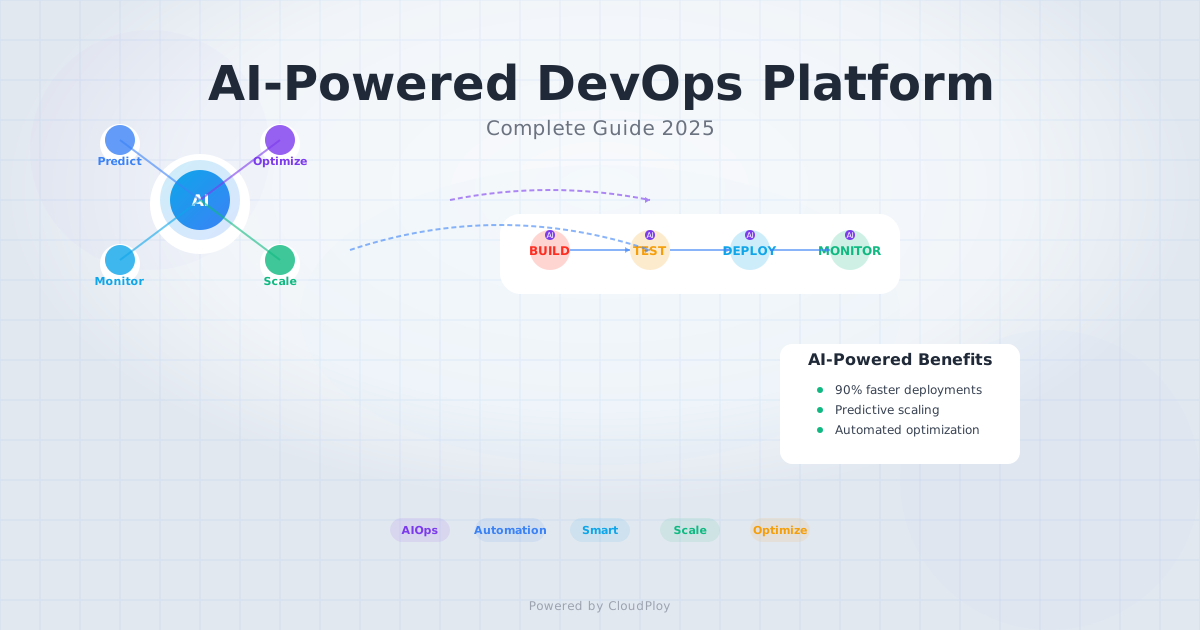
The DevOps landscape is experiencing its most significant transformation since the advent of containers. Artificial Intelligence and Machine Learning are no longer experimental additions - they’re becoming the backbone of modern deployment platforms. Welcome to the era of AIOps, where intelligent systems predict failures, automate remediation, and optimize deployments without human intervention.
The AIOps market, valued at $1.5 billion in 2024, is expanding at a 15% compound annual growth rate. By 2025, 64% of developers are already integrating AI into their workflows, fundamentally changing how we approach application deployment and infrastructure management.
What is AI-Powered DevOps (AIOps)?
AIOps represents the convergence of Artificial Intelligence and IT Operations, creating intelligent systems that can:
- Predict and prevent failures before they impact users
- Automate complex deployment decisions based on historical data
- Optimize resource allocation in real-time
- Provide intelligent root cause analysis during incidents
- Continuously learn from deployment patterns and outcomes
Unlike traditional DevOps tools that require manual configuration and monitoring, AI-powered platforms adapt and improve autonomously, reducing Mean Time to Detect (MTTD) and Mean Time to Resolve (MTTR) by up to 90%.
Core Components of AI-Powered DevOps Platforms
1. Intelligent Deployment Orchestration
Modern AI-powered platforms analyze deployment patterns, success rates, and environmental factors to make intelligent deployment decisions:
# AI-driven deployment configuration
deployment:
  strategy: intelligent-progressive
  ai_config:
    canary_percentage: auto  # AI determines optimal percentage
    rollback_threshold: auto  # AI sets based on historical data
    traffic_analysis: enabled
    performance_prediction: enabled

  health_checks:
    - endpoint: /health
      expected_response_time: "< 200ms"
      ai_anomaly_detection: enabled
    - metric: cpu_usage
      threshold: auto  # AI determines based on workload

  rollback_triggers:
    - error_rate_spike: auto
    - latency_degradation: auto
    - ai_confidence_score: "< 0.8"
2. Predictive Monitoring and Alerting
AI systems continuously analyze metrics to predict potential issues:
# Example AI monitoring configuration
class AIMonitoring:
    def __init__(self):
        self.models = {
            'anomaly_detection': AnomalyDetectionModel(),
            'failure_prediction': FailurePredictionModel(),
            'capacity_planning': CapacityPlanningModel()
        }

    def analyze_metrics(self, metrics):
        anomalies = self.models['anomaly_detection'].detect(metrics)
        failure_risk = self.models['failure_prediction'].predict(metrics)
        capacity_needs = self.models['capacity_planning'].forecast(metrics)

        if failure_risk > 0.7:
            self.trigger_preventive_action()

        if capacity_needs.scale_prediction > 1.5:
            self.auto_scale_resources()
3. Automated Root Cause Analysis
When issues occur, AI systems can identify root causes within seconds:
{
  "incident": {
    "timestamp": "2025-09-23T14:30:00Z",
    "symptoms": ["high_response_time", "error_rate_spike"],
    "ai_analysis": {
      "root_cause": "database_connection_pool_exhaustion",
      "confidence": 0.92,
      "contributing_factors": [
        "traffic_spike_from_marketing_campaign",
        "recent_code_deployment_increased_db_queries"
      ],
      "recommended_actions": [
        "increase_connection_pool_size",
        "enable_query_caching",
        "scale_database_read_replicas"
      ],
      "prevention_strategies": [
        "implement_circuit_breaker_pattern",
        "add_connection_pool_monitoring",
        "create_database_performance_alerts"
      ]
    }
  }
}
Top AI-Powered DevOps Platforms in 2025
Enterprise Solutions
1. GitLab Ultimate with AI Features
- AI-powered merge request reviews
- Intelligent pipeline optimization
- Predictive analytics for deployment success
- Automated security vulnerability detection
2. Azure DevOps with AI Operations
- AI-driven build optimization
- Intelligent test case selection
- Automated workload prediction
- Smart resource allocation
3. GitHub Copilot for DevOps
- AI-powered workflow generation
- Intelligent CI/CD pipeline creation
- Automated infrastructure as code
- Smart deployment strategies
Emerging AI-First Platforms
Qovery with AI Integration
# Qovery AI-enhanced configuration
application:
  name: "web-app"
  type: "web"
  ai_features:
    auto_scaling: true
    intelligent_routing: true
    predictive_maintenance: true
    cost_optimization: true

  deployment:
    strategy: "ai-progressive"
    ai_rollback: true
    performance_monitoring: true
CloudPloy’s AI-Powered Approach
- Intelligent framework detection and optimization
- AI-driven server provisioning
- Predictive scaling based on traffic patterns
- Automated security hardening
- Smart backup scheduling
Real-World AIOps Implementation Strategies
Phase 1: Foundation (Months 1-2)
Data Collection and Integration
# Set up comprehensive monitoring
kubectl apply -f monitoring-stack.yaml

# Install AI-capable observability
helm install prometheus-ai prometheus-ai/prometheus-ai-stack
helm install grafana-ml grafana/grafana-ml

# Configure data pipelines
cat > ai-data-pipeline.yaml << EOF
apiVersion: v1
kind: ConfigMap
metadata:
  name: ai-data-config
data:
  metrics_retention: "90d"
  log_aggregation: "enabled"
  trace_sampling: "intelligent"
  anomaly_detection: "enabled"
EOF
Baseline Model Training
# Train initial AI models on historical data
class DevOpsAITraining:
    def train_baseline_models(self):
        # Anomaly detection model
        anomaly_model = IsolationForest(contamination=0.1)
        anomaly_model.fit(self.historical_metrics)

        # Deployment success prediction
        success_model = RandomForestClassifier()
        success_model.fit(self.deployment_features, self.success_labels)

        # Capacity planning model
        capacity_model = LinearRegression()
        capacity_model.fit(self.usage_patterns, self.scaling_events)

        return {
            'anomaly': anomaly_model,
            'success': success_model,
            'capacity': capacity_model
        }
Phase 2: Intelligence (Months 3-4)
Implement Predictive Capabilities
# AI-powered deployment pipeline
apiVersion: tekton.dev/v1beta1
kind: Pipeline
metadata:
  name: ai-deployment-pipeline
spec:
  tasks:
  - name: ai-risk-assessment
    taskRef:
      name: ai-deployment-risk
    params:
    - name: commit-hash
      value: $(params.commit-hash)
    - name: target-environment
      value: $(params.environment)

  - name: intelligent-testing
    taskRef:
      name: ai-test-selection
    runAfter: ["ai-risk-assessment"]
    when:
    - input: $(tasks.ai-risk-assessment.results.risk-score)
      operator: in
      values: ["low", "medium"]

  - name: ai-deployment
    taskRef:
      name: progressive-deployment
    runAfter: ["intelligent-testing"]
    params:
    - name: strategy
      value: $(tasks.ai-risk-assessment.results.recommended-strategy)
Phase 3: Automation (Months 5-6)
Full AIOps Implementation
class AIOpsOrchestrator:
    def __init__(self):
        self.ai_models = self.load_trained_models()
        self.deployment_engine = DeploymentEngine()
        self.monitoring = MonitoringSystem()

    def handle_deployment_request(self, deployment_config):
        # AI risk assessment
        risk_score = self.ai_models['risk'].predict(deployment_config)

        if risk_score < 0.3:  # Low risk
            strategy = "blue-green"
        elif risk_score < 0.7:  # Medium risk
            strategy = "canary-progressive"
        else:  # High risk
            strategy = "manual-approval-required"

        # AI-optimized deployment
        deployment_plan = self.ai_models['optimization'].create_plan(
            config=deployment_config,
            strategy=strategy,
            environment_state=self.get_environment_state()
        )

        return self.deployment_engine.execute(deployment_plan)

    def continuous_optimization(self):
        """Continuously learn and improve"""
        while True:
            # Collect new data
            recent_deployments = self.get_recent_deployment_data()
            performance_metrics = self.monitoring.get_metrics()

            # Retrain models
            self.retrain_models(recent_deployments, performance_metrics)

            # Optimize configurations
            self.optimize_deployment_strategies()

            time.sleep(3600)  # Run hourly
AI-Powered DevOps Use Cases
1. Intelligent Incident Response
Traditional Approach:
- Alert fires → Engineer investigates → Manual diagnosis → Fix applied
- Time to resolution: 2-4 hours
- Human error prone
AI-Powered Approach:
class IntelligentIncidentResponse:
    def handle_incident(self, alert):
        # AI analyzes the incident
        analysis = self.ai_analyzer.analyze({
            'metrics': self.get_current_metrics(),
            'logs': self.get_relevant_logs(),
            'deployment_history': self.get_recent_deployments(),
            'similar_incidents': self.get_historical_incidents()
        })

        if analysis.confidence > 0.85:
            # Auto-remediate high-confidence issues
            self.auto_remediate(analysis.recommended_actions)
        else:
            # Escalate with AI-generated context
            self.escalate_with_context(alert, analysis)
2. Predictive Scaling
apiVersion: autoscaling/v2
kind: HorizontalPodAutoscaler
metadata:
  name: ai-predictive-scaler
spec:
  scaleTargetRef:
    apiVersion: apps/v1
    kind: Deployment
    name: web-app
  minReplicas: 2
  maxReplicas: 100
  behavior:
    scaleUp:
      mode: Pods
      value: predictive  # AI determines scale-up rate
    scaleDown:
      mode: Percent
      value: conservative  # AI prevents unnecessary scale-downs
  metrics:
  - type: External
    external:
      metric:
        name: ai-predicted-load
      target:
        type: Value
        value: "80"
3. Intelligent Security Hardening
class AISecurityHardening:
    def analyze_security_posture(self, application):
        vulnerabilities = self.security_scanner.scan(application)
        risk_assessment = self.ai_risk_model.assess(vulnerabilities)

        # AI generates hardening recommendations
        recommendations = self.ai_security_model.recommend({
            'vulnerabilities': vulnerabilities,
            'application_type': application.type,
            'compliance_requirements': application.compliance,
            'risk_tolerance': application.risk_tolerance
        })

        # Auto-apply low-risk hardening measures
        for rec in recommendations:
            if rec.risk_score < 0.2:
                self.auto_apply_hardening(rec)
            else:
                self.queue_for_approval(rec)
Measuring AIOps Success
Key Performance Indicators
Deployment Velocity
- Pre-AIOps: 2-3 deployments per day
- Post-AIOps: 15-20 deployments per day
- Improvement: 600% increase
Incident Resolution
- Mean Time to Detect (MTTD): 45 minutes → 3 minutes
- Mean Time to Resolve (MTTR): 4 hours → 15 minutes
- False Positive Rate: 60% → 5%
Resource Optimization
- Infrastructure costs: 30% reduction through intelligent scaling
- Resource utilization: 40% improvement
- Performance optimization: 25% faster response times
ROI Calculation
class AIOpsROI:
    def calculate_annual_savings(self):
        # Developer productivity gains
        dev_time_saved = 40  # hours per week per developer
        dev_hourly_rate = 75
        team_size = 20
        productivity_savings = dev_time_saved * dev_hourly_rate * team_size * 52

        # Infrastructure cost reduction
        monthly_infra_cost = 50000
        reduction_percentage = 0.30
        infra_savings = monthly_infra_cost * reduction_percentage * 12

        # Incident cost reduction
        avg_incident_cost = 25000
        monthly_incidents = 8
        incident_reduction = 0.75
        incident_savings = avg_incident_cost * monthly_incidents * incident_reduction * 12

        total_savings = productivity_savings + infra_savings + incident_savings
        return {
            'productivity': productivity_savings,  # $3,120,000
            'infrastructure': infra_savings,      # $180,000
            'incidents': incident_savings,        # $1,800,000
            'total': total_savings               # $5,100,000
        }
CloudPloy’s AI-Powered Future
Current AI Capabilities
- Intelligent Framework Detection: Automatically detects and optimizes for Laravel, WordPress, and PHP applications
- Smart Server Provisioning: AI selects optimal server configurations based on application requirements
- Predictive Maintenance: Monitors server health and predicts maintenance needs
- Automated Security Updates: AI-driven security patch management
Upcoming AI Features (2025 Roadmap)
Q4 2024 - Q1 2025:
- AI-powered deployment risk assessment
- Intelligent rollback automation
- Predictive scaling for traffic spikes
Q2 2025:
- Natural language deployment commands
- AI-generated infrastructure optimization recommendations
- Automated compliance checking
Q3-Q4 2025:
- Full AIOps integration with ChatOps
- AI-powered cost optimization recommendations
- Intelligent multi-cloud resource allocation
Getting Started with CloudPloy’s AI Features
# Deploy with AI optimization
ploy deploy --ai-optimize

# Enable predictive scaling
ploy scaling enable --mode=predictive

# Configure AI monitoring
ploy monitor setup --ai-alerts --predictive-analysis

# Generate AI insights
ploy insights generate --period=30d --recommendations
Best Practices for AI-Powered DevOps
1. Start with Data Quality
- Ensure comprehensive monitoring and logging
- Implement proper data governance
- Establish baseline metrics before AI implementation
2. Gradual AI Adoption
- Begin with low-risk automation (notifications, reporting)
- Progress to medium-risk automation (scaling, deployments)
- Finally implement high-risk automation (incident response)
3. Human-AI Collaboration
- Maintain human oversight for critical decisions
- Implement proper approval workflows
- Provide AI decision transparency
4. Continuous Learning
- Regularly retrain AI models with new data
- Monitor AI performance and accuracy
- Implement feedback loops for continuous improvement
5. Security and Compliance
- Ensure AI decisions are auditable
- Implement proper access controls for AI systems
- Maintain compliance with industry regulations
The Future of AIOps
Emerging Trends
Generative AI in DevOps
- AI-generated infrastructure code
- Automated documentation creation
- Intelligent test case generation
Edge AI for DevOps
- Local AI processing for faster decisions
- Reduced latency in AI-powered monitoring
- Improved data privacy and security
Quantum-Enhanced AIOps
- Quantum computing for complex optimization problems
- Enhanced prediction accuracy
- Faster processing of large datasets
Industry Predictions for 2025-2026
- 85% of enterprises will have implemented some form of AIOps
- 60% reduction in manual DevOps tasks through AI automation
- $50 billion market for AI-powered DevOps tools by 2026
Conclusion
AI-powered DevOps platforms are not just the future - they’re the present reality for forward-thinking organizations. By implementing AIOps strategies, teams can achieve unprecedented levels of automation, reliability, and efficiency in their deployment pipelines.
The key to success lies in gradual adoption, starting with foundational monitoring and data collection, then progressively implementing more sophisticated AI capabilities. Platforms like CloudPloy are leading this transformation by integrating AI features that make deployment and infrastructure management more intelligent and autonomous.
Whether you’re managing a small startup application or enterprise-scale infrastructure, the AIOps revolution offers tangible benefits: faster deployments, fewer incidents, optimized costs, and happier development teams. The question isn’t whether to adopt AI-powered DevOps - it’s how quickly you can implement it to stay competitive in 2025 and beyond.
Ready to experience AI-powered deployment automation? CloudPloy’s intelligent platform makes it simple to deploy applications with AI-driven optimization, predictive scaling, and automated incident response. Start your free deployment today and join the AIOps revolution.